
![ChatGPT Prompts for Marketing Managers: 15 Campaign, Copy & SEO Templates [2026]](/_next/image?url=%2Fassets%2Fexamples%2Fvector-1.jpg&w=3840&q=75)
Marketing teams that use AI effectively in 2026 produce 3x more content at 60% lower cost. The difference isn't the AI — it's the prompts. Here are 15 field-tested ChatGPT prompts for marketing that you can copy and use right now.
Why Marketers Need Better Prompts
Generic prompts produce generic output. "Write me an ad for my product" gives you filler. The prompts below give ChatGPT the context, constraints, and goals it needs to produce work that's actually usable.
Ad Copy & Paid Media
1. Google Ads Headline Generator
Write 10 Google Ads headlines for [PRODUCT/SERVICE] targeting [AUDIENCE].
Each headline must be under 30 characters, include the keyword "[TARGET KEYWORD]",
and focus on a different benefit or angle (price, speed, quality, social proof, etc.).
Format: numbered list, headline only.
2. Facebook/Instagram Ad Copy (AIDA Framework)
Write a Facebook ad for [PRODUCT] using the AIDA framework:
- Attention: Hook the reader in 1 sentence (pain point or desire)
- Interest: Expand on the problem or aspiration
- Desire: Show how [PRODUCT] solves it with 2 specific benefits
- Action: Strong CTA with urgency

Target audience: [DESCRIBE YOUR AUDIENCE]
Tone: [casual/professional/urgent]
Max length: 150 words
3. Retargeting Ad Objection Handler
Write 3 retargeting ad variations for people who visited [LANDING PAGE] but didn't convert.
Each ad should address a different objection:
1. Price objection
2. Trust/credibility objection
3. "Not sure it's right for me" objection

Product: [PRODUCT]
Main benefit: [KEY BENEFIT]
Offer: [DISCOUNT/GUARANTEE/FREE TRIAL IF ANY]
Social Media Marketing
4. LinkedIn Thought Leadership Post
Write a LinkedIn post about [TREND/INSIGHT] in [INDUSTRY].
Structure:
- Hook: Counterintuitive or surprising opening line
- Story: 2–3 sentence personal experience or observation
- Insight: What this means for [AUDIENCE]
- Takeaway: 1 actionable tip
- CTA: Question to drive comments

Tone: Professional but conversational. No corporate jargon.
Length: 150–200 words.
5. Instagram Caption Series
Create 5 Instagram captions for [BRAND] to post across the next week.
Each should have a different format:
1. Educational (share a tip or stat)
2. Behind-the-scenes (brand story)
3. User benefit (specific outcome)
4. Social proof (result or testimonial angle)
5. Engagement bait (question or poll)

Brand voice: [DESCRIBE YOUR BRAND VOICE]
Niche: [YOUR NICHE]
Include 5 relevant hashtags per caption.
6. Twitter/X Thread
Write a 7-tweet thread about "[TOPIC]" that provides genuine value.
Tweet 1: Hook that makes people want to read the thread
Tweets 2–6: One insight, tip, or fact per tweet (max 280 chars each)
Tweet 7: Summary + follow CTA

Make each tweet standalone (no "1/7" style numbering needed in the text).
Tone: Direct, insightful, no fluff.
Email Marketing
7. Welcome Email Sequence
Write a 3-email welcome sequence for new subscribers who downloaded [LEAD MAGNET].

Email 1 (Immediate): Deliver the promised resource + introduce the brand
Email 2 (Day 3): Teach one valuable concept related to [TOPIC]
Email 3 (Day 7): Case study or success story + soft pitch for [PRODUCT]

Brand: [BRAND NAME]
Audience: [DESCRIBE SUBSCRIBERS]
Main goal: Drive subscribers toward [DESIRED ACTION]
Tone: [DESCRIBE TONE]
8. Re-Engagement Email
Write a re-engagement email for subscribers who haven't opened emails in 60+ days.
Subject line options: Write 3 subject lines (A/B/C test options)
Body:
- Acknowledge the silence without guilt-tripping
- Remind them of the value they get from staying subscribed
- Offer something new or exclusive
- Clear unsubscribe option framed positively

Brand: [BRAND NAME]
List segment: [TYPE OF SUBSCRIBERS]
SEO & Content Marketing
9. Blog Post Outline Generator
Create a comprehensive SEO blog post outline for the keyword "[TARGET KEYWORD]".
Include:
- SEO title (under 60 characters, keyword first)
- Meta description (under 155 characters)
- H2 and H3 header structure (8–12 sections)
- Key points to cover in each section
- 3 FAQ questions for a FAQ section

Audience: [DESCRIBE READERS]
Search intent: [INFORMATIONAL/COMMERCIAL/TRANSACTIONAL]
Content goal: [RANK/EDUCATE/CONVERT]
10. Product Description for SEO
Write an SEO-optimised product description for [PRODUCT NAME].
Requirements:
- Primary keyword: "[KEYWORD]" (use naturally 2–3 times)
- Length: 150–200 words
- Include: key features (3), main benefits (2), and who it's for
- End with a soft CTA
- Avoid superlatives like "best" or "amazing" unless substantiated

Product details: [PASTE SPECS OR NOTES]
Brand Storytelling & Strategy
11. Brand Origin Story
Write a compelling brand origin story for [COMPANY].
Structure:
1. The problem the founder faced personally
2. Why existing solutions weren't good enough
3. The "aha" moment that led to the product
4. What the brand stands for today

Facts to include: [PASTE REAL FACTS ABOUT YOUR BRAND]
Tone: Authentic, human, no startup jargon
Length: 200 words
12. Competitor Comparison Page
Write a fair but persuasive comparison page: "[YOUR BRAND] vs [COMPETITOR]"
Structure:
- Brief intro acknowledging both are good options
- Comparison table (5 criteria: price, feature X, feature Y, support, [OTHER])
- Where [YOUR BRAND] wins and why
- Where [COMPETITOR] wins (be honest — builds trust)
- Who should choose [YOUR BRAND]
- CTA

Data to include: [PASTE REAL COMPARISON POINTS]
Campaign & Strategy
13. Product Launch Campaign Brief
Create a 2-week product launch campaign plan for [PRODUCT].
Include:
- Campaign theme and tagline
- Day-by-day content schedule across [CHANNELS]
- Email sequence (teaser → launch → follow-up)
- Social posts (5 per week)
- Paid ad strategy overview
- KPIs to track

Product: [DESCRIBE PRODUCT]
Launch date: [DATE]
Budget: [BUDGET RANGE]
Target audience: [DESCRIPTION]
14. Marketing Audit Prompt
Perform a marketing audit of [BRAND/WEBSITE].
Assess:
1. Messaging clarity (does it instantly communicate value?)
2. Target audience alignment (is content right for the ICP?)
3. Content gaps (topics missing that competitors cover)
4. CTA effectiveness
5. SEO basics (title tags, meta descriptions, header structure)

Based on: [PASTE WEBSITE COPY OR DESCRIBE CURRENT MARKETING]
15. Customer Persona Creator
Create 3 detailed customer personas for [PRODUCT/SERVICE].
For each persona:
- Name, age, job title
- Primary goal related to [PRODUCT CATEGORY]
- Biggest frustration or pain point
- Where they get information (channels, publications)
- How they evaluate solutions (price-first, quality-first, peer recommendations)
- Ideal message that resonates with them

Existing customer data: [PASTE ANY DATA OR DESCRIBE YOUR CUSTOMERS]
ChatGPT Image Prompts for Marketers
Great visual assets make campaigns stand out. These AI image prompts from our library generate professional marketing visuals you can use for social ads, product pages, and brand content.
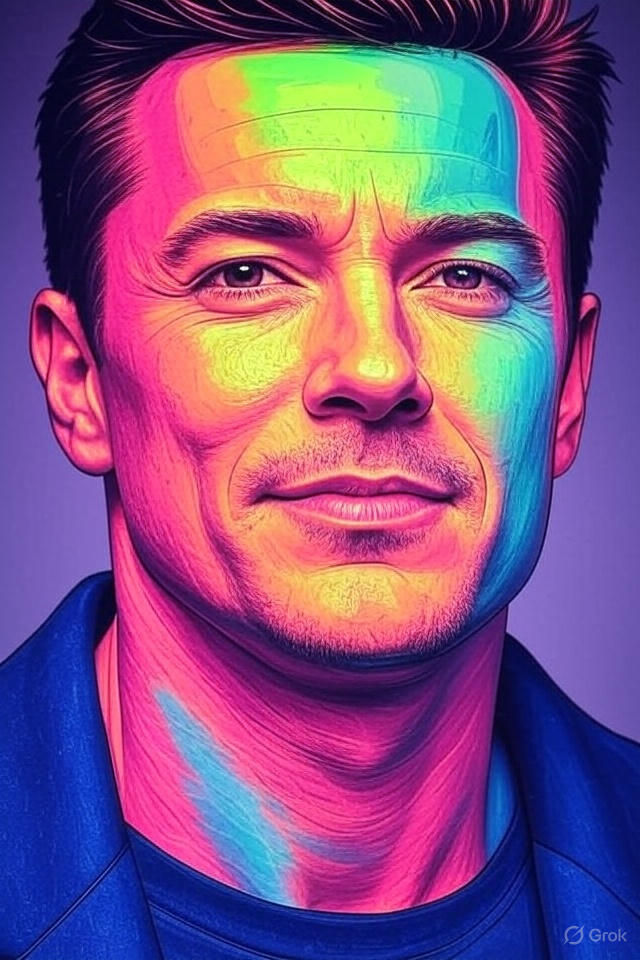 Neon Pop Art — Try this image prompt free →
 Vector Illustration — Try this image prompt free →
 Lifestyle Product Shot — Try this image prompt free →
How to Get Better Marketing Output from ChatGPT
Give it a role
Start with: "You are a senior direct-response copywriter with 10 years of experience in [INDUSTRY]." This frames the AI's perspective.
Constrain the output
Specify format, length, tone, and what NOT to include. Constraints produce better output than freedom.
Iterate, don't start over
Use: "That's good. Now make it 30% shorter and more conversational." Build on outputs rather than regenerating from scratch.
Feed it real data
Paste in customer reviews, competitor copy, or your brand guidelines. Real inputs produce relevant outputs.
Use the Quality Auditor
After any AI draft: "Review this for generic phrases and robotic tone. Flag every sentence that sounds AI-generated and suggest a more authentic rewrite."
Conclusion
These 15 ChatGPT prompts for marketing cover the full stack — from paid ads to email to brand strategy. The best marketers in 2026 aren't replacing their creativity with AI; they're using AI to execute their ideas faster and test more variations.
Copy these prompts, customise the bracketed placeholders, and start generating. Browse the full ChatGPT prompt library for 70+ additional templates across art, photography, and content creation.
Pro tip: Save your best-performing prompts in a shared team document. Your prompt library is a competitive asset.