
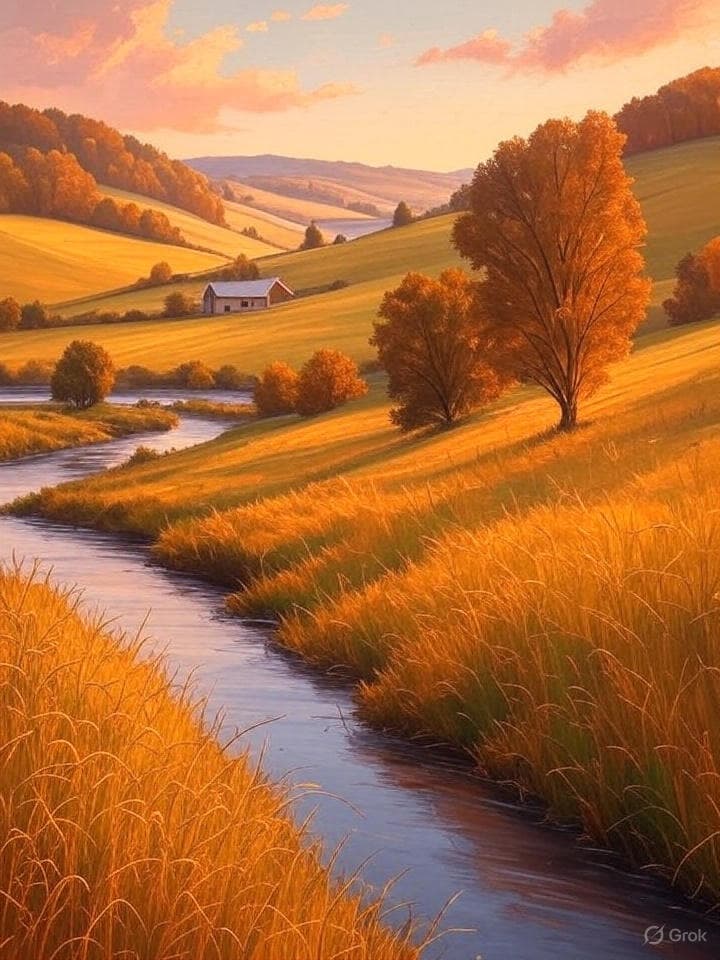
Oil painting remains one of the most evocative and timeless art forms, and with ChatGPT and modern AI image generators, you can replicate its rich textures, luminous glazing effects, and expressive brushwork with carefully crafted prompts. Whether you're aiming for the photorealistic precision of the Old Masters or the bold gestural strokes of Impressionism, these 12 ready-to-use templates will help you generate stunning oil painting results.
Understanding Oil Painting Aesthetics in AI Prompts
What Makes Oil Painting Look Different
Oil paintings have distinct visual qualities that separate them from photographs or digital illustrations:
- Visible Brushwork: The physical texture of paint applied with brushes or palette knives
- Layered Glazing: Translucent layers building depth and luminosity
- Chiaroscuro: Dramatic contrast between light and shadow (pioneered by Caravaggio)
- Impasto: Thick, raised paint creating tactile texture
- Color Mixing on Canvas: Wet-into-wet blending creating smooth transitions
- Varnish Sheen: The characteristic warm glow of aged oil paintings
Key Prompt Elements for Oil Painting
Always include these descriptors to signal oil painting aesthetic:
- Medium indicators: "oil on canvas", "oil painting", "impasto technique"
- Artist references: "in the style of Rembrandt", "Sargent-esque brushwork", "Monet's palette"
- Surface texture: "visible brushstrokes", "palette knife texture", "canvas grain visible"
- Lighting style: "chiaroscuro lighting", "Rembrandt lighting", "soft diffused studio light"
- Color approach: "rich warm undertones", "glazed highlights", "earthy pigments"
12 Ready-to-Use Oil Painting Prompt Templates
1. Classical Portrait — Old Masters Style
Create an oil painting portrait in the style of the Dutch Golden Age masters (Rembrandt, Vermeer).
Subject: [person description]. Technique: Oil on canvas with layered glazing technique,
dramatic chiaroscuro lighting with single directional light source from upper left.
Brushwork: Smooth blending on skin tones with slightly more textured treatment in
hair and clothing. Background: Dark, graduated shadow (black to dark umber).
Skin tones: Warm undertones using lead white, yellow ochre, burnt sienna, and
cadmium red. Expression: [dignified/contemplative/serene]. Detail level: Museum-quality
portrait painting, fine details visible in eyes and collar. Medium: Oil on canvas.
Style: Old Masters realism, 17th-century Northern European portraiture.
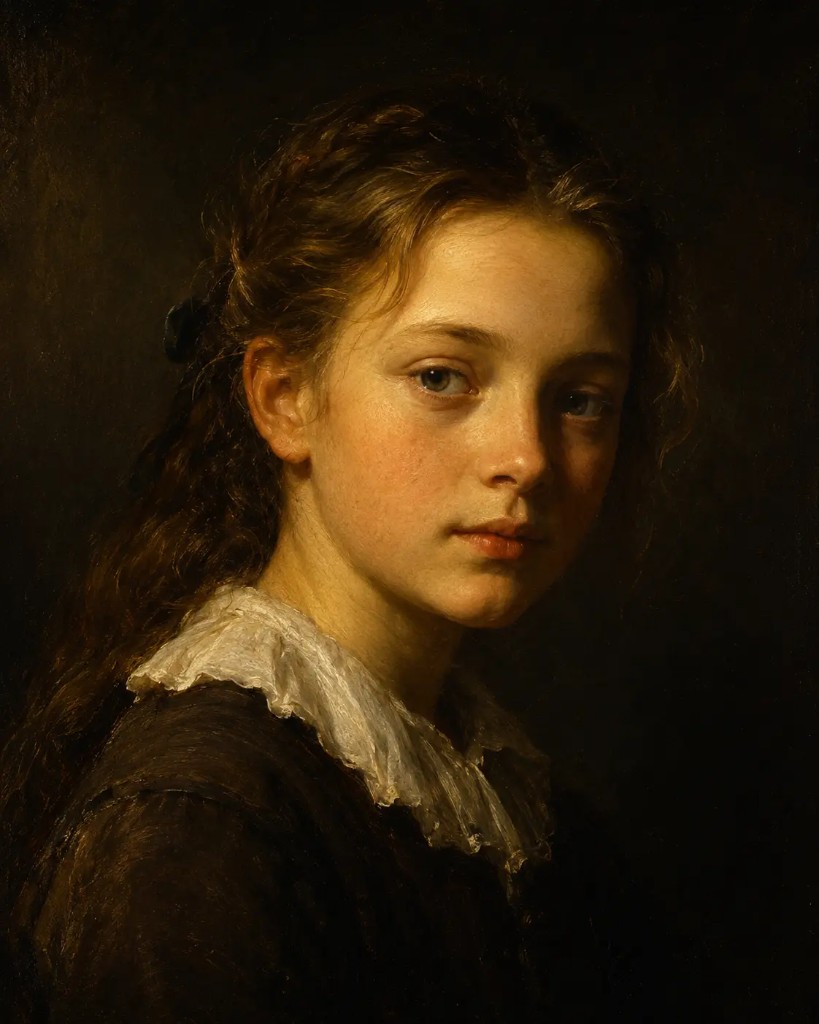
Sample output using subject: "a young girl in her teens." Notice the single directional light from upper left, warm glazed skin tones, and dark graduated background — hallmarks of 17th-century Northern European portraiture.
2. Impressionist Landscape — Plein Air Style
Create an Impressionist oil painting landscape in the style of Claude Monet or
Pierre-Auguste Renoir. Scene: [landscape description]. Technique: Plein air painting
with loose, expressive brushwork capturing fleeting light and atmosphere. Brushstrokes:
Short, comma-shaped dabs of pure color applied side by side rather than blended,
visible canvas grain between strokes. Color palette: Pure, unmixed colors —
cadmium yellow, cobalt blue, viridian green, rose madder, titanium white.
Light: [golden morning/afternoon/sunset] light breaking through. Atmosphere:
Shimmering, alive with captured moment. Composition: Open, panoramic view with
strong color relationships rather than sharp detail. Feel: The vibration of light
on [water/foliage/fields]. Museum-quality Impressionist painting.
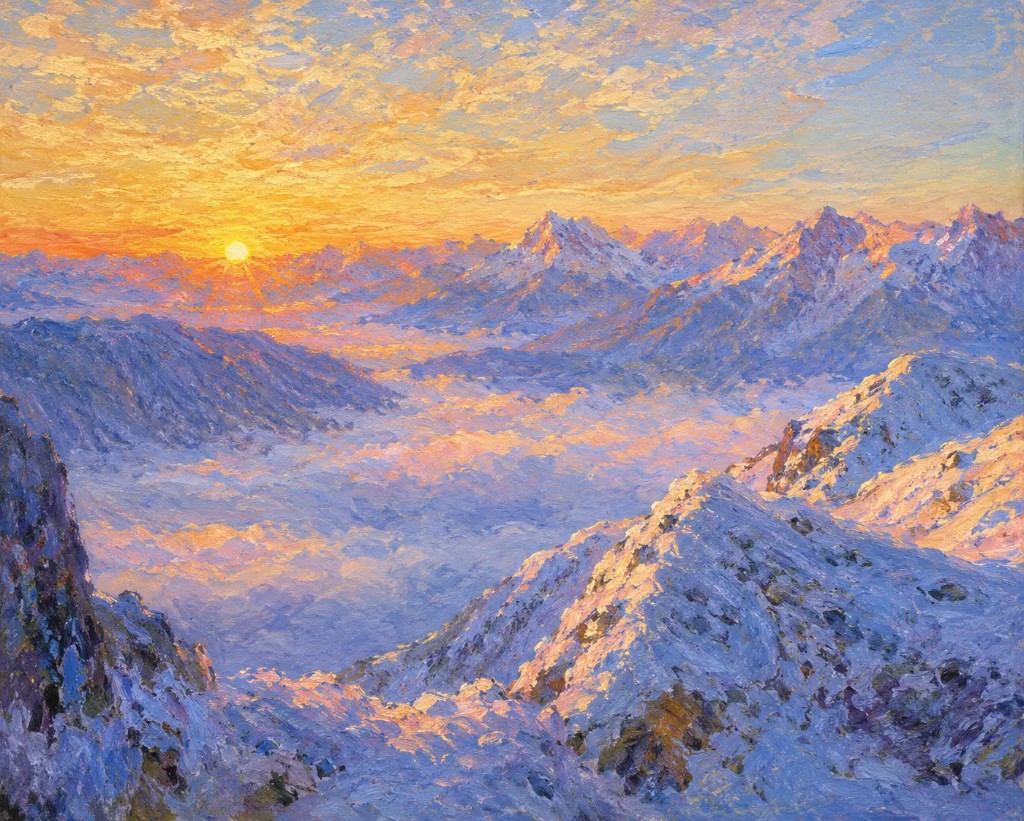
Sample output using scene: "a sunrise from the Alps mountains." The short comma-shaped dabs of cadmium yellow, cobalt blue, and rose madder capture the shimmering quality of dawn light on snow — exactly the vibration Monet and Renoir pursued in their plein air work.
3. Oil Painting Portrait — Sargent Bravura Style
Create an oil painting portrait in the style of John Singer Sargent's bravura
technique. Subject: [person or group]. Technique: Alla prima (wet-into-wet)
single-session painting with confident, slashing brushwork. Brushstrokes: Bold,
visible, confident — each stroke placed precisely without overworking. Values:
Strong value contrast with brilliant highlights on lightest areas (titanium white
applied directly). Palette: Limited — black, white, yellow ochre, burnt sienna,
cadmium red with occasional viridian for shadows. Background: Loosely rendered
[interior/outdoor setting] with impressionistic treatment. Clothing: Fabric texture
suggested with single confident strokes capturing material quality. Expression:
[lively/elegant/direct]. Feel: The energy and spontaneity of a masterful sitting.
4. Still Life — Flemish Masters Style
Create an oil painting still life in the Flemish tradition of Jan de Heem or
Adriaen van Dyck. Arrangement: [objects — fruits, flowers, vessels, fabrics].
Surface: Dark wooden table with rich shadow. Technique: Multiple oil glazing layers
creating extraordinary depth and luminosity. Objects: Each rendered with obsessive
detail — every petal, fruit skin imperfection, and surface reflection visible.
Lighting: Single dramatic light source illuminating arrangement from [left/right],
deep shadows. Color: Rich jewel tones — deep reds, luminous yellows, lush greens
against dark backgrounds. Textures: Contrast between smooth glass, rough cloth,
soft petals, and rough wood. Hidden details: [Optional: insects, water droplets,
vanitas symbols]. Museum quality, 17th-century Dutch masterpiece aesthetic.
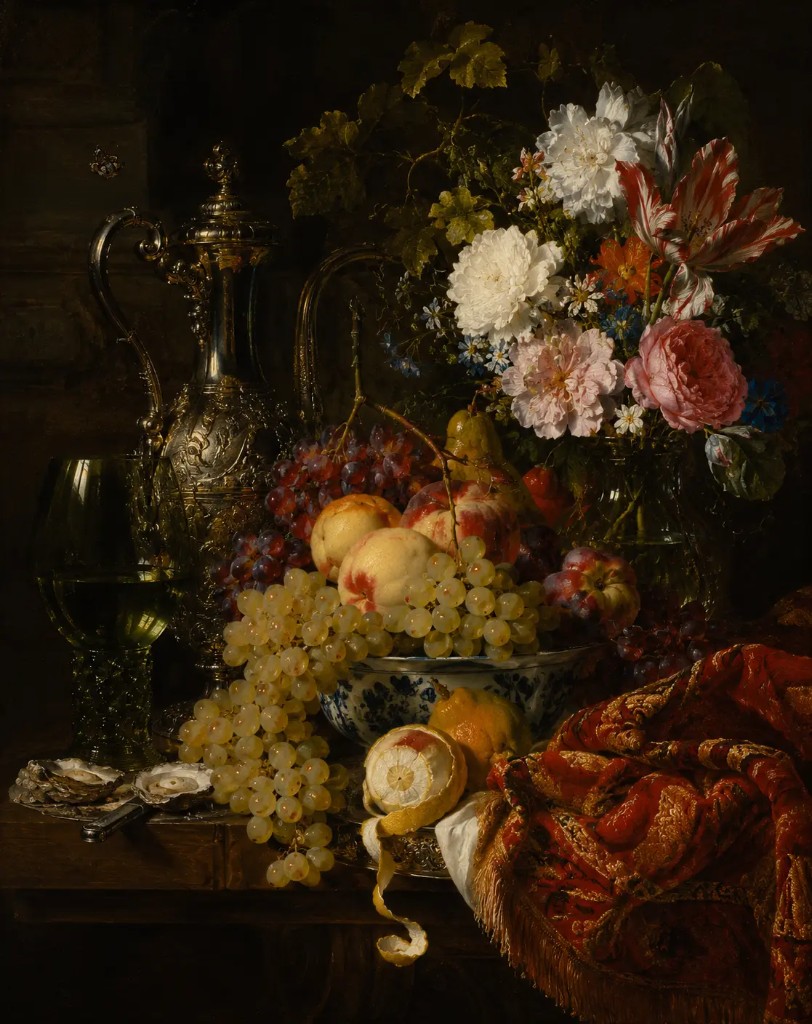
Sample output with arrangement: "grapes, peaches, roses, silver ewer, Delft bowl, draped red cloth." Note the multiple glazing layers in the glass and silverware, the obsessive petal detail in the flowers, and the spiral of lemon peel — a classic vanitas symbol in Dutch Golden Age still life.
Try our Oil Painting Portrait Generator →
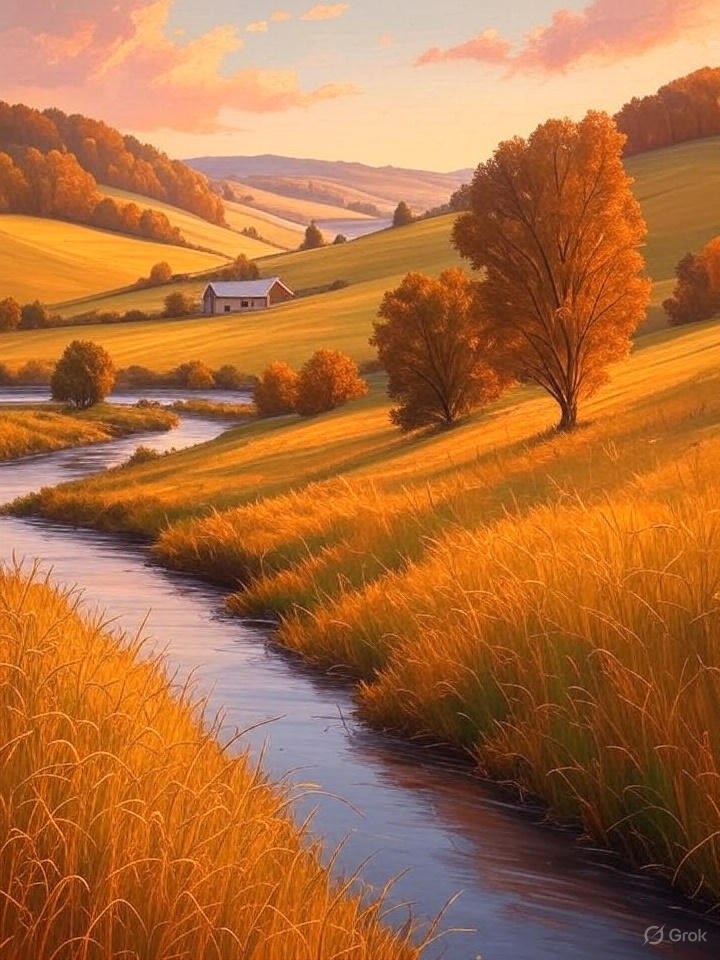
5. Plein Air Harbor or Water Scene
Create an oil painting of [harbor/lake/river/ocean] scene in the plein air tradition.
Technique: Outdoor painting capturing natural light with loose, gestural brushwork.
Water: Reflections rendered with horizontal brushstrokes capturing movement and light
— [choppy/calm/glassy] surface. Sky: Painted with confident, blended strokes showing
[cumulus clouds/clear blue/overcast gray]. Boats/vessels: [if present] simplified
with confident marks, rigging suggested rather than fully detailed. Atmosphere:
[Morning mist/afternoon clarity/evening warmth] captured in color temperature.
Foreground: [dock/rocks/sand] with textured impasto. Color palette emphasizing
[cool blues and grays/warm golden light/stormy atmosphere]. Compositional anchor:
Strong horizontal line of water meeting sky. Feel: Immediacy of outdoor painting.
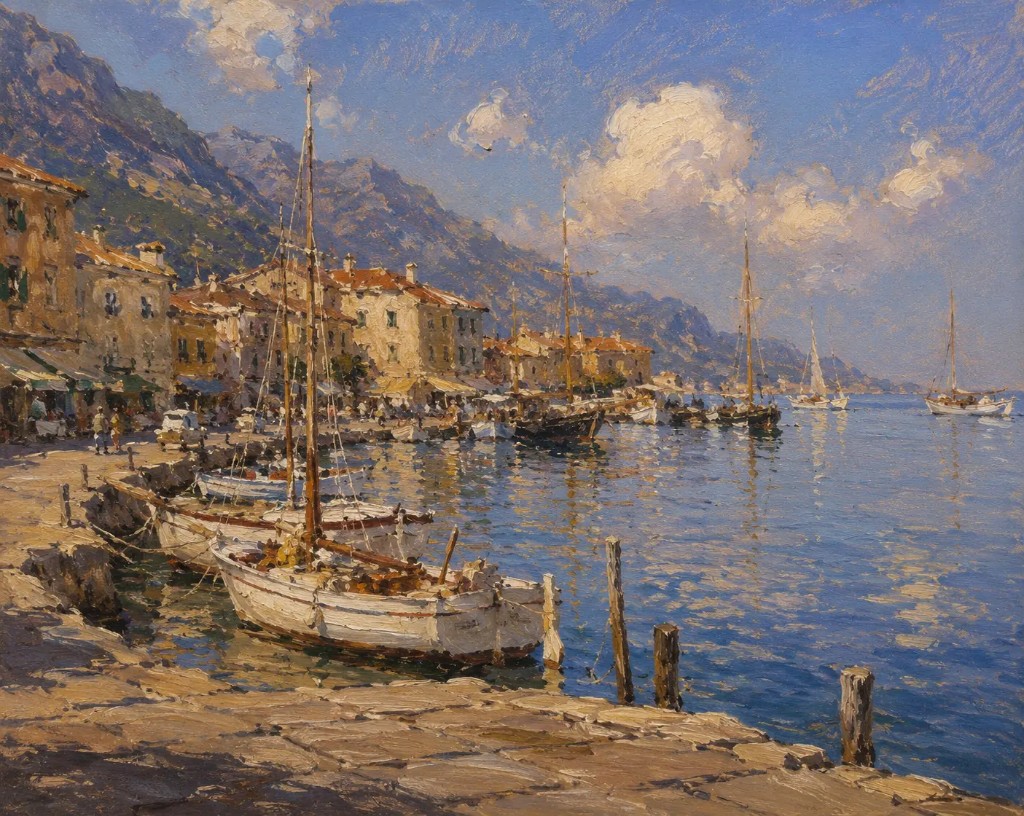
Sample output using scene: "a Mediterranean harbor with sailboats moored at a stone quay, hillside town, afternoon clarity." The calm glassy water is captured with confident horizontal strokes, rigging is suggested rather than fully detailed, and the warm cobalt and ochre palette conveys the immediacy of outdoor painting in full afternoon sun.
6. Contemporary Oil Portrait — Alla Prima
Create a contemporary oil painting portrait combining realism with expressive
brushwork. Subject: [person description]. Background: [solid color/abstracted/textured
suggestion]. Technique: Modern alla prima approach — decisive brushwork, limited
palette, psychological depth. Brushwork: Face rendered with careful attention to
planes of the head, but visible and gestural rather than photographic. Values:
Strong lights and darks creating form and depth. Palette: [warm/cool/neutral]
key with complementary accents. Expression: Revealing [specific emotional quality].
Contemporary feeling while maintaining painterly tradition. Format: [square/portrait/
landscape orientation]. Oil on linen or canvas. Gallery-quality contemporary portrait.
7. Landscape — Hudson River School Style
Create a grand landscape oil painting in the Hudson River School tradition (Thomas
Cole, Frederic Edwin Church). Scene: [American wilderness/dramatic natural landscape].
Scale: Vast, sublime panorama conveying nature's grandeur. Light: Transcendent golden
or dramatic light — often sunset or sunrise illuminating landscape from within.
Detail: Meticulous foreground botanical detail transitioning to atmospheric distance.
Atmosphere: Luminous, glowing atmosphere suggesting divine presence in nature.
Human element: [tiny figures/small settlement] emphasizing nature's scale. Colors:
Rich autumn tones, luminous sky, reflective water, detailed foliage. Technique:
Smooth, precise blending conveying vast, crystalline distances. Mood: Awe-inspiring,
romantic nationalism. 19th-century American masterpiece quality.
8. Oil Painting — Moody Interior Scene
Create an oil painting of a moody interior scene in the tradition of Dutch Golden
Age interiors or Vermeer. Setting: [room description — kitchen, studio, parlor].
Light source: Single window or candle providing all illumination. Window light:
Cool, diffused natural light entering from [left/right], creating dramatic contrast
with interior shadow. Objects: Everyday items rendered with extraordinary attention —
fabric textures, ceramic glazes, wooden surfaces, metal reflections. Human figure:
[If present] engaged in [activity] with quiet, absorbed expression. Floor: [tile/
wooden floorboard] with subtle light reflection. Atmosphere: Quiet, contemplative,
suspended moment. Palette: Warm earth tones in shadow, cooler lighter tones where
light falls. Painting quality: Museum-worthy interior genre painting.
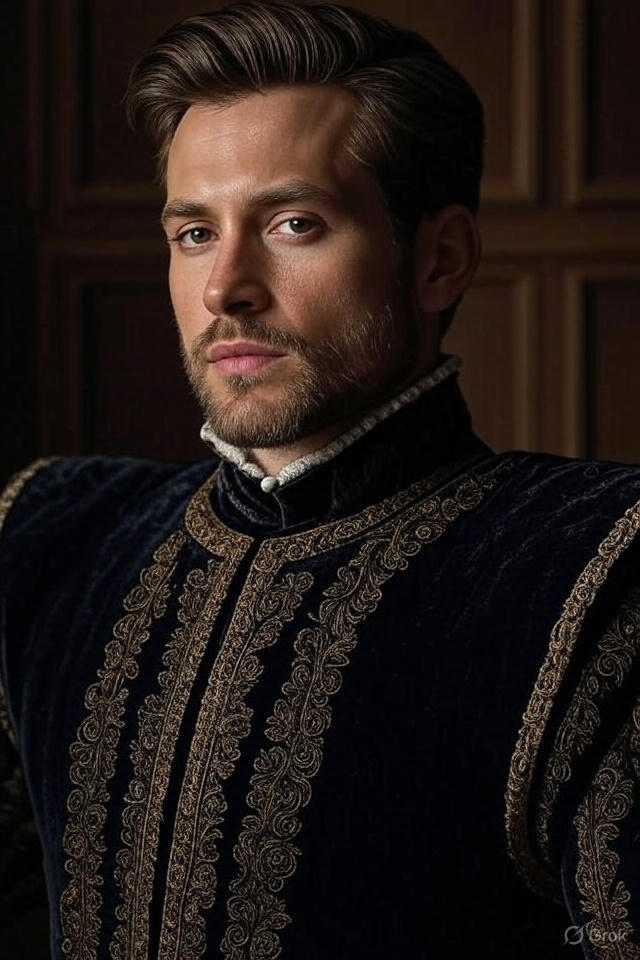
9. Oil Portrait — Bouguereau Academic Style
Create an oil painting in the Academic Realism tradition of William-Adolphe
Bouguereau. Subject: [figure description]. Technique: Highly finished, smooth oil
glazing technique with virtually invisible brushwork. Skin: Porcelain-smooth complexion
with subtle color variations — warm pinks, cool shadows, translucent highlights.
Form: Perfectly rendered three-dimensional anatomy. Background: [classical setting/
soft landscape/simple studio]. Lighting: Soft, flattering studio light with subtle
shadows. Drapery: [If present] rendered with perfect understanding of fabric behavior.
Color: Clean, luminous palette — bright highlights, subtle color in shadows.
Idealization: Classical beauty ideals applied to [subject]. Quality: Comparable to
19th-century French Academy Salon submission. Technical excellence paramount.
10. Abstract Expressionist Oil Painting
Create an Abstract Expressionist oil painting in the tradition of Franz Kline,
Willem de Kooning, or Mark Rothko. Style: [Kline-esque bold black gesture/de Kooning
energetic figuration/Rothko luminous color fields]. Technique: Raw, physical painting —
evidence of bodily gesture, drips, palette knife marks, scraping. Color palette:
[Specific colors relevant to chosen style]. Scale: Monumental feeling even in
reproduction. Surface: Visible canvas texture, varied paint thickness, layered
history of marks. Emotion: [Urgency/contemplation/violence/serenity] expressed
through painterly gesture. No representational content — pure formal expression.
Quality: Major museum-quality Abstract Expressionist canvas.
11. Oil Painting Seascape — Romantic Tradition
Create a Romantic tradition seascape oil painting in the style of J.M.W. Turner
or Winslow Homer. Sea: [stormy/calm/dramatic] ocean scene. Technique: Atmosphere
and light as primary subject matter — forms dissolving into light. Turner approach:
Vortex composition with light at center, forms swirling toward it. Homer approach:
More structured composition with powerful wave forms and rocky coast. Color:
[Turner's luminous yellows and ochres dissolving into sea/Homer's dark green-gray
waves]. Drama: Sense of nature's power and sublime beauty. Human element: [Ship/
figures/boats] if present, shown vulnerable against nature's scale. Atmosphere:
Spray, mist, atmospheric perspective creating depth. Painterly quality throughout.
12. Oil Painting — Contemporary Still Life
Create a contemporary oil painting still life combining traditional technique with
modern sensibility. Objects: [contemporary items — [phones, books, everyday objects]
alongside traditional still life elements]. Arrangement: Thoughtful composition
on [surface description]. Technique: Combination of precise rendering and looser
gestural passages. Light: [Natural window light/dramatic artificial light]. Color:
Contemporary palette — perhaps limited or high-key or deliberately discordant.
Concept: [Optional conceptual element — vanitas updated for contemporary life,
commentary on consumer culture]. Background: [Simple neutral/textured/patterned].
Quality: Gallery-ready contemporary painting with painterly vitality.
Oil Painting Styles Reference Guide
Historical Styles and Their Prompt Keywords
| Style | Period | Key Keywords |
|---|---|---|
| Flemish Old Masters | 1400s-1600s | dark background, layered glazes, precise detail, chiaroscuro |
| Dutch Golden Age | 1600s | single light source, domestic scenes, optical realism |
| French Baroque | 1600s | grand scale, dramatic gesture, theatrical lighting |
| Rococo | 1700s | pastel palette, playful subjects, soft lighting |
| Neoclassicism | 1750s-1850s | clean lines, mythological subjects, cool palette |
| Romanticism | 1800s | emotional drama, nature's sublime, warm/cool contrast |
| Realism | 1850s-1880s | unidealized subjects, natural lighting, working class |
| Impressionism | 1870s-1890s | broken color, outdoor light, loose brushwork |
| Post-Impressionism | 1880s-1900s | bold color, personal expression, structure |
| Expressionism | 1900s-1930s | distorted form, emotional color, raw gesture |
| Abstract Expressionism | 1940s-1960s | pure gesture, large scale, emotional directness |
| Contemporary | 2000s-present | hybrid approaches, conceptual elements, any medium |
Advanced Oil Painting Prompt Techniques
The Glazing Effect
To simulate oil glazing in AI prompts:
Multiple translucent glazing layers creating depth — warm reddish underpainting
visible through cool shadow glazes, luminous highlights built with white mixed
into medium layers, final transparent amber glaze unifying the composition
Palette Knife Texture
For impasto palette knife work:
Thick impasto applied with palette knife — ridges and peaks of paint visible,
shadows cast by raised paint areas, gestural knife marks creating surface energy,
paint dragged and scraped across canvas
Underpainting Reference
Evidence of warm sienna underpainting visible through thin passages, alla prima
touches over established structure, tonal foundation supporting final color layers
Choosing AI Tools for Oil Painting Results
Midjourney v7 — Best for capturing painterly quality. Use --style raw combined with oil painting descriptors. The --sref parameter allows referencing specific painting styles with exceptional accuracy.
DALL-E 3 (ChatGPT) — Best for following detailed prompt instructions about specific masters and techniques. Excellent at following complex multi-element descriptions of traditional styles.
Stable Diffusion (2026) — Fine-tuned models like "Oil Painting XL" produce remarkable texture rendering. Best for high control users comfortable with technical settings.
Digital Oil Painting Prompts
Digital oil painting combines the texture and depth of traditional oil painting with the flexibility of digital art tools. These prompts target a slightly different aesthetic — they feel more painterly than photographic, with visible brushwork, but without the physical constraints of real canvas and pigment.
Digital Oil Painting Portrait
Create a digital oil painting portrait of [subject description].
Style: Contemporary digital oil painting with realistic brushwork simulation.
Technique: Visible, confident brushstrokes in the face and hair with smoother
blending in shadow areas. Digital canvas texture visible. Palette: Rich,
warm skin tones with complementary background color. Lighting: [soft studio /
dramatic side light / natural window light]. Mood: [dignified / contemplative /
warm]. Quality: Gallery-quality digital painting, indistinguishable from
traditional oil on first glance.
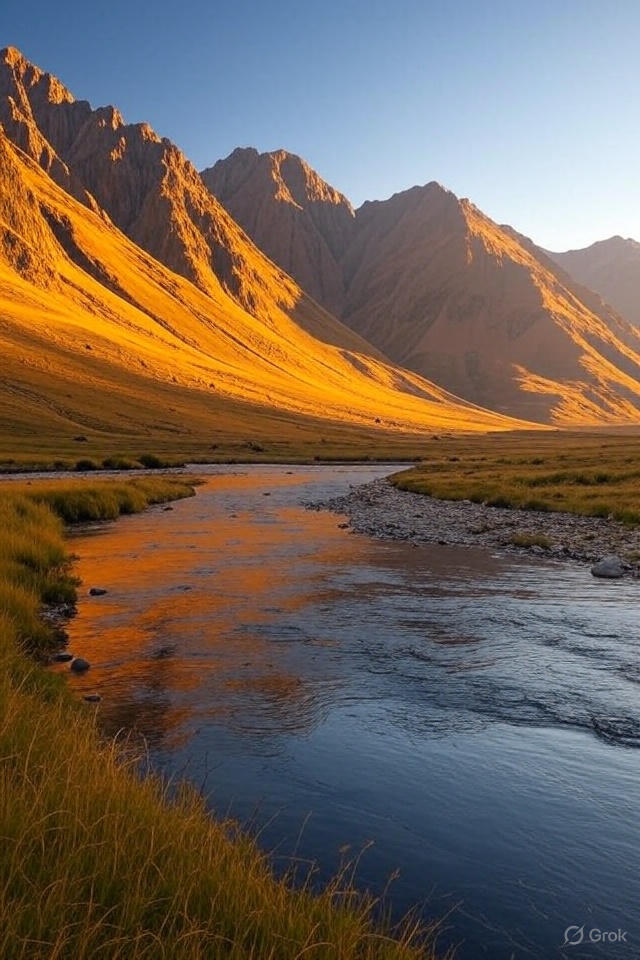
Digital Painting Landscape
Create a digital oil painting landscape of [scene description].
Style: Digital plein air painting with expressive, visible brushwork.
Technique: Short, gestural strokes for foliage and sky; longer confident strokes
for water and flat ground. Color: [warm sunset palette / cool morning tones /
dramatic storm colors]. Atmosphere: Light and mood captured with digital
impressionist technique. Canvas: Visible digital canvas texture throughout.
Quality: Fine art digital painting suitable for print reproduction.
How to Turn a Photo into an Oil Painting Style with ChatGPT
To convert a photo concept into an oil painting style using ChatGPT:
Take [subject / scene description] and render it as an oil painting.
Transform photographic detail into painterly interpretation — visible
brushstrokes, canvas grain, oil paint texture. Maintain the composition
and lighting of the original but interpret through oil painting technique.
Style: [Old Masters / Impressionist / Contemporary realist]. Medium: Oil on canvas.
Oil Painting Prompt Generator Tips
An oil painting prompt generator — whether ChatGPT, Midjourney, or another tool — works best when you give it three types of information:
- The subject — who or what you're painting
- The style — which tradition (Old Masters, Impressionism, Contemporary)
- The technique — specific brushwork, lighting, and surface texture keywords
The 12 templates above give you all three. For a quick oil painting prompt, the minimum effective structure is:
[Subject] in oil painting style, [artist reference] technique,
visible brushstrokes, oil on canvas, [lighting description].
Frequently Asked Questions
What is the best ChatGPT oil painting prompt?
The most effective ChatGPT oil painting prompt follows this structure: [Subject] rendered as an oil painting in the style of [artist reference — e.g. Rembrandt, Monet, Sargent]. Technique: [specific brushwork — e.g. chiaroscuro lighting with smooth skin tone blending / loose Impressionist dabs of pure color]. Medium: Oil on canvas with visible brushstrokes and canvas texture. Lighting: [lighting description]. Always include an artist reference — this single addition has the biggest impact on the quality of oil painting results.
What is a "chatgpt oil painting prompt"?
A ChatGPT oil painting prompt is a text instruction written specifically to make ChatGPT (with DALL-E 3) or other AI tools generate an image that looks like an oil painting. It includes medium indicators ("oil on canvas," "impasto technique"), brushwork descriptions ("visible palette knife texture," "Sargent-esque confident strokes"), and lighting terms ("chiaroscuro," "Rembrandt lighting"). The 12 templates in this guide are ready-to-use ChatGPT oil painting prompts.
Can ChatGPT generate digital oil painting images?
Yes — ChatGPT with DALL-E 3 can generate images that closely replicate the look of both traditional and digital oil painting. Use prompts that specify "digital oil painting," "painterly brushwork," "visible canvas texture," and reference a specific style (Impressionist, Old Masters, contemporary realist). For the most convincing digital oil painting results, Midjourney v7 with --style raw combined with oil painting descriptors often produces the most convincing brushwork texture.
What prompts make photos look like oil paintings?
To make a photo concept look like an oil painting in ChatGPT, describe the subject and add: "rendered as an oil painting — visible brushstrokes, oil on canvas, painterly interpretation of photographic realism, [artist style reference], canvas grain visible, [lighting: chiaroscuro / soft diffused / golden hour]." The most important keywords are "oil on canvas," "visible brushstrokes," and your chosen artist reference.
Internal Linking
Ready to generate your first AI oil painting? Start with our Oil Painting Portrait Generator — it's free and requires no sign-up.
For photography-inspired portraits with a painterly quality, explore our portrait photography prompts which show how lighting principles translate between photography and painting.
Also see our ChatGPT 4K image prompts guide for combining photorealistic quality techniques with oil painting aesthetics.
Conclusion
Oil painting prompts work best when you understand the visual language of the tradition you're imitating. The more specific your reference — whether it's Rembrandt's chiaroscuro, Monet's broken color, or Sargent's bravura brushwork — the more convincingly the AI will deliver results that capture that style's essence.
Start with Template 1 (Classical Portrait) or Template 4 (Still Life) for the most reliable results, as these styles have the richest visual dataset in AI training. As you gain confidence, experiment with combining styles or pushing into more contemporary territory.
The 12 templates here cover the full spectrum from Old Masters to Abstract Expressionism — each one is a starting point for your own creative exploration.