
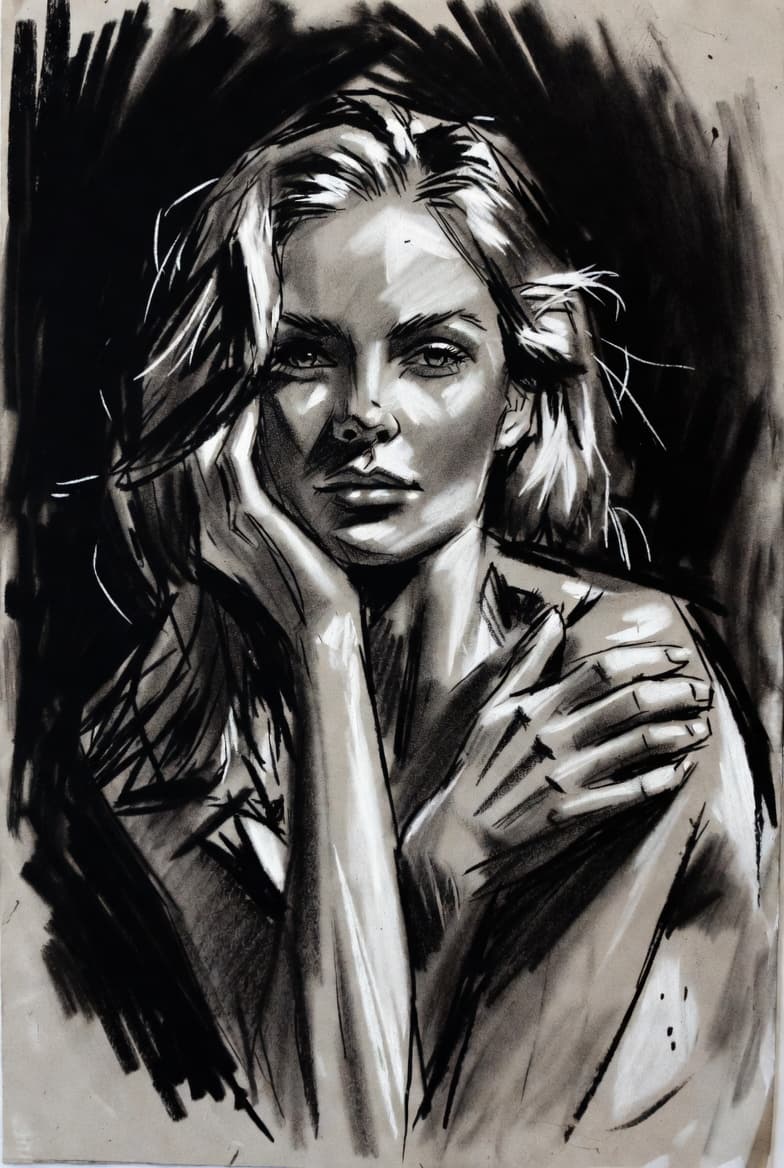
Sketch and line art represent the most fundamental form of visual expression — ideas captured in the economy of line before elaboration with color or tone. This guide focuses on the two most technically sophisticated sketch traditions: architectural drawing, with its demand for spatial accuracy and technical clarity, and fashion illustration, with its elongated proportions and gestural confidence. Together they represent the full range of linear mark-making from precise technical drafting to expressive gestural artwork.
Understanding Line Art and Sketch Aesthetics in AI Prompts
The Quality of Line
Line quality is everything in sketch and drawing. AI prompts should specify:
- Line weight variation: Thick contours, medium structural lines, fine details — good drawing uses all three
- Confidence: A single decisive line vs. tentative multiple searching lines
- Consistency: Same tool/technique throughout, or deliberate variation
- Relationship to form: Contour lines (following surface), outline lines (silhouette), structural lines (showing construction)
Sketch Vocabulary
| Term | Meaning for Prompts |
|---|---|
| Contour drawing | Lines following the surface form |
| Blind contour | Looking only at subject, not the drawing |
| Gesture | Quick fluid marks capturing movement/energy |
| Construction lines | Visible guide lines showing how form was built |
| Hatching/crosshatching | Tone through parallel/crossing lines |
| Line weight variation | Lines varying from thick to thin |
| Continuous line | Single unbroken mark covering entire subject |
12 Sketch Prompt Templates
1. Architectural Elevation Drawing
Create a precise architectural elevation drawing of [building type and style].
Drawing type: Architectural elevation — flat, orthographic representation
of the building facade, no perspective distortion. Line quality: Technical
drafting with hierarchy: thick lines for main outlines (0.5-0.7mm weight),
medium for secondary elements (0.3mm), fine for details (0.1mm). Elements:
Windows: precise rectangle frames with mullion details. Doors: Correctly
proportioned entries. Ornament: [if applicable] Architectural decoration
accurately represented. Proportions: Correct relative proportions suggesting
structural reality. Scale: [Include scale bar or figure for scale].
Drawing style: [Hand-drafted with warmth/CAD precision/hybrid]. Ground line:
Clear baseline. Sky/background: White — pure architectural representation.
Quality: Professional architectural presentation quality.
2. Perspective Architectural Sketch
Create an architectural perspective sketch of [building or space type].
Perspective type: [One-point/two-point/three-point] perspective appropriate
to the subject and viewpoint. Viewpoint: [Eye-level pedestrian/low dramatic/
elevated overview/interior view]. Line character: [Technical precision/warm
hand-drawn/plein air spontaneity]. Primary construction: [Steel and glass/
masonry/timber/contemporary concrete] suggested through appropriate line and
texture vocabulary. Entourage: [Trees/figures/vehicles] rendered with appropriate
looseness relative to architecture. Shadow: [Cast shadows establishing sun
direction and ground plane]. Sky: [Simple lines/dramatic cloud suggestion/
left as white]. Tone: [Pure line only/light hatching for shadow/ink wash
suggestion]. Medium impression: [Technical pen on trace/pencil on cartridge/
marker and pen urban sketch].
3. Interior Architecture Sketch
Create a hand-drawn interior architectural sketch of [room type — living space/
office/café/gallery/studio]. Perspective: Interior perspective from [doorway
looking in/corner revealing two walls/eye-level mid-room]. Architecture:
[Structural elements — columns/beams/arches/windows] as primary drawing subject.
Furniture: Rendered with appropriate looseness — suggested rather than minutely
detailed. Natural light: [Window light direction] indicated through shadow
patterns. Materials: Different materials suggested through line and texture
differences — [wood grain for floors, smooth for walls, texture for upholstery].
Human scale: [Figure or furniture establishing scale]. Line quality: [Technical/
exploratory/loose design sketch]. Warmth: The hand-drawn quality of design
exploration, not CAD output. Format: [Single-point perspective/isometric/
cutaway view].
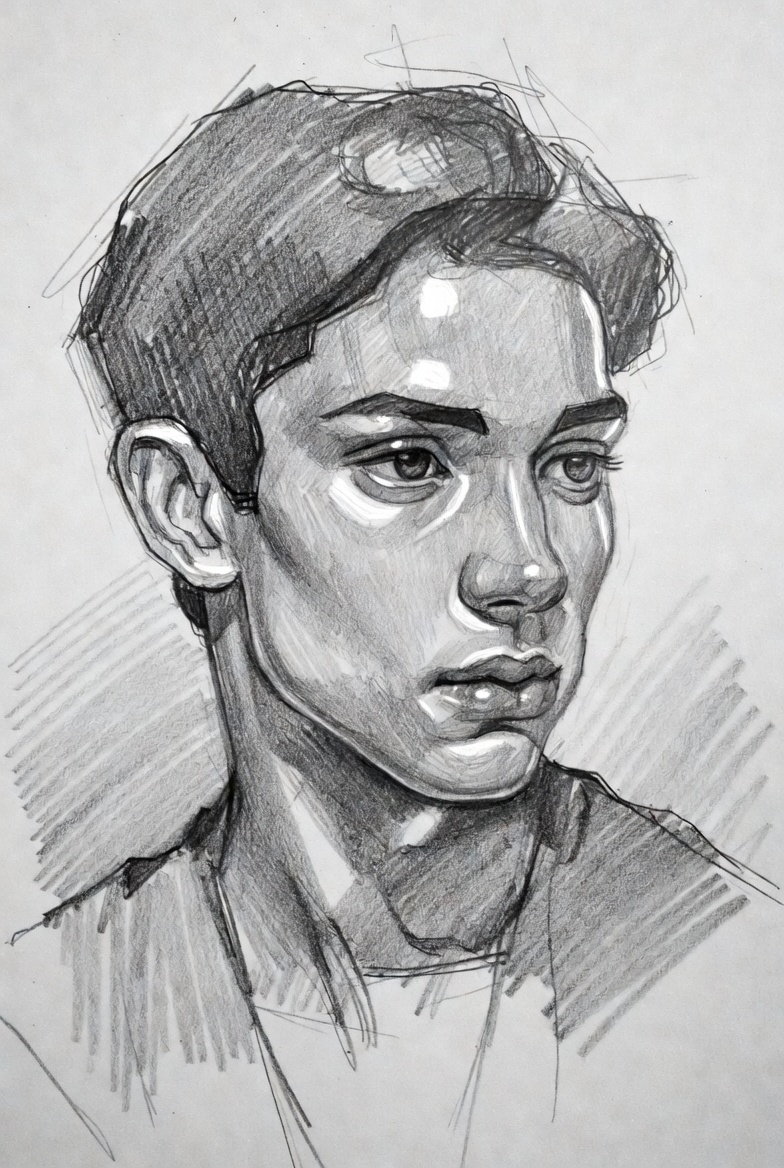
4. Fashion Design Sketch — Couture
Create a couture fashion design sketch of [garment description] in the style
of high fashion illustration. Croquis: Fashion proportion — 9-10 heads tall,
elongated limbs. Pose: [Elegant walking/dramatic static/back view].
Linework: Confident, single-stroke lines for major forms — the assurance
of a professional fashion illustrator. Garment construction: Visible seam
lines, darts, and construction details suggesting how the garment is made.
Fabric: [Silk/velvet/structured/sheer] quality suggested through line —
[smooth flowing curves/architectural straight lines/delicate fine marks].
Embellishment: [If applicable] hand-drawn decorative detail. Rendering:
[Pure line sketch/gestural watercolor wash over lines/marker and pen].
Hair: Stylized gestural marks. Face: Fashion illustration simplification —
large eyes, minimal other features. Shoes: [Described] matching garment aesthetic.
Try our Fashion Sketch Line Art Generator →
5. Urban Sketching — Street Scene
Create an urban sketch in the style of on-location street sketching. Location:
[Specific street type — old town narrow street/market/café street/harbor].
Approach: Capture the scene as if sketched in 30-45 minutes on location.
Architecture: [Building type] as dominant element — drawn with more care
than anything else. Figures: Quick gestural marks — suggested movement,
not posed portraits. Cars/vehicles: [If present] simplified but readable.
Signs/text: [Suggested or readable as appropriate]. Ink lines: Confident,
slightly imperfect — these are real decisions made on location. Watercolor:
[Optional: loose washes over ink]. Composition: [Natural cropping of a
real scene — not artificially balanced]. Foreground interest: [Table and
chair/parked bike/plants] adding depth. Quality: Urban Sketchers community
standard — honest, direct, alive.
6. Product Design Industrial Sketch
Create a product design industrial sketch of [product — electronic device/
furniture/vehicle/tool]. View: [Three-quarter perspective/exploded view/
comparison of variants]. Line style: Industrial design sketch quality —
confident, fast lines suggesting form. Perspective: Correct product perspective
showing three-dimensional quality. Materials: Different surface finishes
suggested through line treatment — [smooth highlights on plastic/hatching
on matte surfaces]. Dimensions: [Optional: dimension lines with measurement
annotations]. Details: Key features called out with leader lines and annotations.
Color: [Marker rendering indicating [color] color scheme/pure line/highlights
with white pencil]. Construction notes: [Optional: handwritten design notes].
Background: White or light gray — product presentation context. Style:
Comparable to automotive design studio or consumer electronics concept sketches.
7. Character Design — Concept Sketch
Create a character design concept sketch of [character description] in the
style of animation or game concept art. Format: [Full character turnaround/
single pose/expression sheet/costume variations]. Proportions: [Realistic/
heroic exaggerated/stylized cartoon/animation-ready]. Linework: Clean
character design lines — confident primary contours with secondary detail
lines. Expression: [If head sheet] multiple expressions on same page.
Accessories and costume: Separately called out or integrated into main figure.
Notes: [Design notes in handwriting around the figure calling out materials,
colors, special features]. Scale reference: [If desired] scale comparison to
another character or object. View: [Front and side orthographic/dynamic
three-quarter/multiple angles]. Style: Professional game studio or animation
studio character concept art.
8. Technical Illustration — Cross-Section
Create a technical illustration cross-section of [object — mechanical device/
building section/natural object/vehicle]. Type: Cutaway or section view
revealing interior. Exterior: Represented in appropriate convention — partially
visible, or shown as ghost lines. Interior: Clearly visible with all components
labeled. Labels: Leader lines to components with [numbered callouts/text labels].
Line hierarchy: Bold for cut edges, medium for visible lines, dashed for
hidden lines. Detail level: Technical illustration accuracy — all major
components visible and correctly related. Background: White or very light
gray. Title block: [Optional: small title block in corner with scale and title].
Style: Technical manual quality — absolute clarity and accuracy over style.
Use standard drafting conventions.
9. Gesture Drawings — Figure Study Page
Create a page of gesture figure drawings in the style of a life drawing session.
Format: Multiple gestures on one page — [4-8 figures] in varied poses.
Poses: [Specific poses — reaching/bending/running/resting/interacting].
Style: 30-second to 2-minute gesture quality — capturing energy and movement
essence, not detailed rendering. Line character: Flowing, continuous, decisive
marks. Proportions: Slightly exaggerated for dynamic effect. Missing detail:
Details suppressed — each figure is an energy and form study, not a portrait.
Medium: [Soft pencil/charcoal/brush pen] implied by line quality. Background:
Warm cream or white. Arrangement: [Scattered across page/organized grid/random].
Quality: Life drawing classroom or Vilppu-style gesture sketch page aesthetic.
10. Landscape Sketch — Plein Air
Create a landscape sketch in plein air tradition. Setting: [Specific landscape —
coastal/forest/mountain/agricultural]. Technique: [10-30 minute] field sketch
capturing essential qualities over precise detail. Media: [Pencil/pen and ink/
watercolor over pencil]. Primary elements: [Strongest visual element —
prominent tree/dramatic skyline/water feature] as compositional anchor.
Atmospheric elements: [Sky, mist, sun direction] indicated with appropriate
looseness. Texture: [Foliage/rock/water] suggested with appropriate marks —
not labored. White space: Paper as sky or lightest areas — not everything filled.
Handwriting: [Optional: location, date, and brief notes in sketchbook style].
Book binding: [Optional: slight curve suggesting sketchbook page]. Quality:
Honest plein air sketch — immediacy and accuracy to actual conditions.
11. Botanical Sketch — Study Page
Create a botanical sketch study page of [plant species or flower type].
Format: Multiple studies on one page — main plant, detail studies, cross-section.
Main study: Full plant or branch in correct proportion, pencil outline with
hatching for tone. Detail studies: [Flower close-up/leaf structure/seed pod/
root system] as separate smaller studies. Cross-section: [If flower] cut
through showing internal structure. Labels: Botanical name and common name
in italic handwriting. Parts labeled: [Stem/leaves/petals/stamens/etc.].
Line quality: Fine, precise — scientific illustration accuracy. Medium:
Pencil or fineliner on white paper — scientific illustration convention.
Background: White. Annotation: [Date/location/observer notes in pencil].
Quality: Kew Gardens or natural history illustration standard.
12. Mixed Media Sketch — Ink and Wash
Create a mixed media sketch of [subject] using ink linework with watercolor
or ink wash. Foundation: Ink lines establishing subject — [confident/loose/
technical/gestural] depending on subject. Wash application: Watercolor or
diluted ink applied over dried ink lines, either within the lines or bleeding
beyond. Wash tones: [Single color monochromatic/limited palette/full color].
Wet-on-wet: [If desired] some wet-into-wet areas creating blooms and soft
passages. Paper texture: Visible in wash areas — suggesting traditional
watercolor paper. White preservation: Brightest highlights as reserved white
paper. Integration: Lines and wash should feel made by the same hand —
cohesive, not like two separate processes pasted together. Quality:
Serious contemporary illustration or plein air study level.
Key Prompt Phrases for Sketch Quality
For Architectural Drawings:
"Hierarchical line weights (thick outlines, medium structural, fine detail),
orthographic or accurate perspective, no color — pure line drawing quality"
For Fashion Sketches:
"Fashion croquis proportions, confident single-stroke lines, gestural
rather than labored, garment as primary focus"
For Expressive Sketches:
"Hand-drawn warmth, visible tool marks, slight imperfections showing
real-time decision making, sketched quality not digital perfection"
Related Resources
- Fashion Sketch Line Art Generator — Generate fashion design sketches
- ChatGPT Pencil Drawing Prompts — Graphite drawing techniques
- ChatGPT Fantasy Character Prompts — Character design for fantasy subjects
- ChatGPT 4K Image Prompts Guide — Add 4K quality modifiers to architectural and fashion sketches for ultra-sharp outputs
Conclusion
Sketch and line art prompts are fundamentally about communicating the quality of mark-making. Unlike color prompts where you're describing visual outcomes, sketch prompts need to describe the behavior of the marks — their confidence, hierarchy, relationship to form, and technique reference.
Start with Template 2 (Perspective Architectural Sketch) or Template 4 (Fashion Design Sketch) to establish your baseline for these two core categories, then explore the specialized templates for your specific application.