
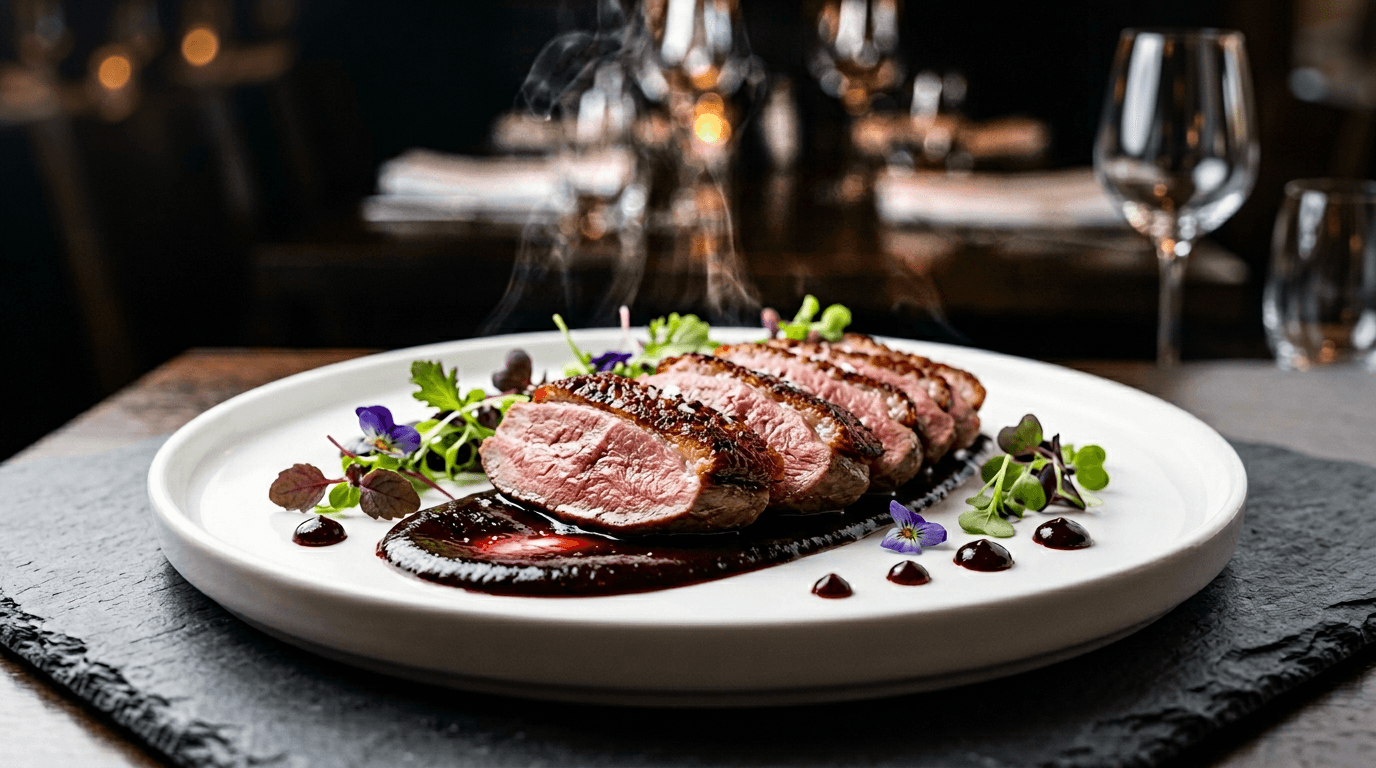
Food photography is one of the most technically demanding genres of AI image generation — and one of the most commercially valuable. A convincing food image requires the AI to simultaneously nail natural color science (food colors are unforgiving to the eye), realistic texture rendering (the glistening of a sauce, the crumb structure of bread, the cellular pattern of a cut strawberry), and the specific lighting conventions that distinguish a quick snapshot from a magazine spread.
This guide covers the three most commercially important food photography styles — the fine dining hero shot, the styled flat lay, and the extreme macro close-up — with a complete copy-paste prompt template for each. Each template is built on real food photography lighting and composition principles, which is why they produce consistent results across ChatGPT, Midjourney, and Flux.
What Separates Professional Food Photography from Generic AI Output
Lighting Is Everything
The single most important factor in food photography quality is the light source specification. Generic food prompts leave lighting to chance — and chance usually produces flat, unconvincing results. Professional food photography uses tightly controlled, named light setups:
- Hero dish shots: Single large octabox camera-left, white reflector fill camera-right. This combination creates the three-dimensional modeling that makes food look sculptural and appetizing.
- Flat lays: Soft diffused window light from one side, very gentle fill from the other. Hard light on a flat lay kills the mood — it's always soft daylight.
- Macro close-ups: Ring light for even, shadowless illumination at extreme close distances. Directional light at macro distances creates deep shadows that obscure the texture you're trying to show.
Surface and Background Context
The surface under the food is a narrative decision, not a background choice. Dark slate says fine dining. Cream linen says breakfast editorial. Rustic reclaimed wood says farm-to-table. Specify it explicitly and the entire image's context becomes coherent.
Material Texture Keywords
Food photography rewards extreme specificity about texture because texture is what makes food look edible: glossy sauce sheen and flow pattern, toast crumb structure legible at 4K, egg yolk surface tension, glistening citrus membrane. Each of these tells the AI exactly which physical properties to render — and renders them in a way that's visually accurate.
Template 1: Fine Dining Hero Dish

Try this restaurant hero dish prompt free →
Fine dining hero shot of a plated main course — pan-seared duck breast,
thin-sliced and fanned, resting on a smear of blackberry reduction,
microgreens and edible flowers scattered artistically,
sauce dots precisely placed. White bone china plate on dark slate surface.

4K ultra-high definition food photography.
Lens: 85mm macro, f/2.8 — hero slice tack sharp, trailing plate elements
softening into bokeh.
Lighting: single large octabox camera-left, white reflector camera-right
filling shadows, black V-flat behind creating dark gradient background.
Steam: subtle wisps rising from duck surface.
Colors: deep mahogany duck skin, glistening burgundy reduction, vivid green
microgreens, white china.
Duck skin texture: individual crispy pores visible at 4K.
Sauce: glossy sheen and flow pattern sharp.
Quality: 4K ultra-HD, Michelin-starred restaurant food photography standard,
every culinary detail crystal clear.
What to customize: Replace the duck breast with any protein. Change the blackberry reduction to match your sauce. Swap dark slate for white marble for a lighter aesthetic. The lighting setup and quality stack remain unchanged regardless of the dish.
Template 2: Styled Flat Lay Breakfast

Try this flat lay breakfast prompt free →
Overhead flat lay of a styled breakfast spread — sourdough toast with avocado
and poached egg on a cream linen napkin, small bowl of granola with fresh berries,
steaming pour-over coffee in a ceramic cup, scattered flowers and loose coffee beans.

Shot from directly above, 90 degrees.
4K ultra-high definition flat lay food photograph.
Lens: 50mm overhead, f/5.6 — entire spread sharp from edge to edge.
Lighting: soft diffused daylight from left window, gentle white reflector from right.
Shadows: subtle natural shadow under each element — depth without drama.
Linen surface: individual weave texture visible.
Food detail: egg yolk surface tension sharp and glossy, avocado texture visible,
toast crumb structure legible at 4K.
Colors: warm neutrals — cream linen, golden toast, vivid green avocado,
orange yolk, deep brown coffee.
Quality: 4K ultra-HD, food styling magazine standard.
What to customize: Replace the breakfast items with any food subject. For a lunch flat lay, swap the linen napkin for dark wood surface or terrazzo tile. The overhead lens and lighting setup are the flat lay constants — keep 50mm overhead, f/5.6 and soft window light for any flat lay subject.
Template 3: Extreme Macro Close-Up

Try this macro food prompt free →
Extreme macro close-up of a freshly cut strawberry — cross-section revealing
the interior seed pattern, juice glistening on the cut surface, individual seeds
with their surface texture visible, tiny water droplets on the skin.
Shot at 1:1 macro ratio.

4K ultra-high definition macro food photograph.
Lens: 100mm macro, f/4 — primary cut surface tack sharp, seeds in sharpest focus,
strawberry edges softening into shallow bokeh.
Lighting: single macro ring light providing even shadowless illumination
across the cut surface.
Colors: vivid crimson flesh, creamy white pith near skin, yellow-green seeds,
glistening transparent juice.
Texture: cellular flesh structure visible at 4K — individual cells and juice pockets
resolved.
Water droplets: spherical, refracting background through their curved surface.
Quality: 4K ultra-HD, scientific macro food photography quality,
every micro-texture crystal clear.
What to customize: Replace the strawberry with any food subject that has interesting interior texture: a freshly split fig, a cracked dark chocolate truffle, a cross-section of a citrus fruit, a sourdough loaf just torn apart. The macro ring light and 100mm macro, f/4 setup remains consistent for any extreme close-up.
Food Photography Quality Keywords
These modifiers boost food photography quality when added to any food prompt:
Texture and material terms:
glossy sauce sheen and flow pattern— makes sauces look wet and realtoast crumb structure legible at 4K— interior bread textureglistening citrus membrane— makes fruit look fresh and juicyindividual herb leaf texture visible— botanical sharpnesssteam wisps rising from surface— warmth and freshness signal
Surface and background:
dark slate surface— fine dining aestheticcream linen napkin with individual weave visible— breakfast and cafépolished white marble with subtle veining— clean, high-end editorialrustic reclaimed wood with grain texture— farm-to-table aestheticblack granite with mirror-polish reflection— cocktails and spirits
Lighting terms:
single large octabox camera-left— the restaurant hero shot standardsoft diffused window light from left— flat lay and lifestyle standardmacro ring light, shadowless— extreme close-up standardwarm tungsten overhead practical light— restaurant atmospherebacklight from behind — translucent food rim-lit— drinks and translucent subjects
Color accuracy:
true-to-life food color rendering— prevents over-saturationaccurate skin tones on fruit— keeps reds red, not magentanatural color grading, not over-processed— editorial authenticity
Related Resources
- Best 4K Prompts for ChatGPT: The Complete List — The hub guide covering all 4K prompt subjects
- ChatGPT 4K Photo Enhancement Prompts — Enhance existing photos to 4K quality
- ChatGPT Prompts for Product Photography — Product and ecommerce photography prompts
- Browse Food Photography Prompts — Explore the full prompt library