
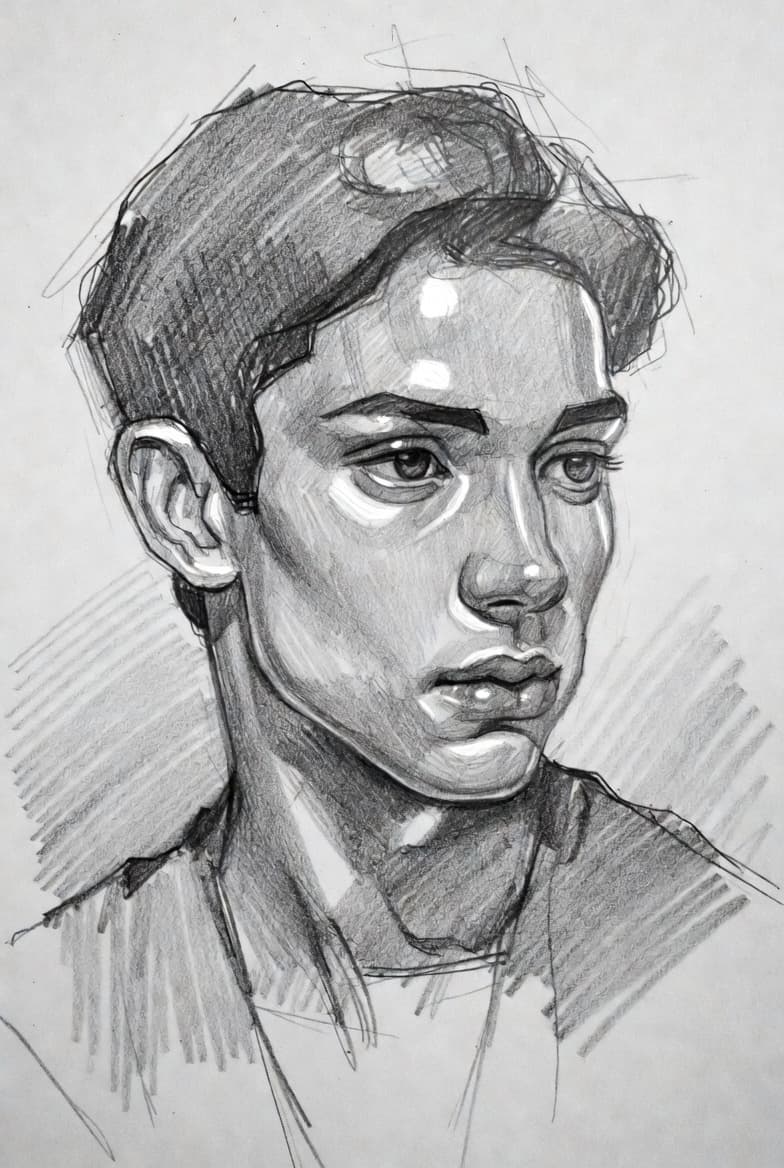
Creating beautiful pencil drawings and sketch art with ChatGPT requires understanding how to structure your prompts for maximum impact. Whether you're a digital artist, animator, or someone exploring AI-assisted art, these carefully crafted prompts work across multiple platforms in 2026, including ChatGPT (DALL-E 3), Midjourney v7, and Flux 1.1 Pro. These prompts will help you generate stunning graphite artwork that captures intricate details and emotional depth.
Understanding Prompt Structure for Drawings
The key to generating exceptional pencil drawings with ChatGPT lies in how you construct your prompts. A well-structured drawing prompt should include:
Core Components of an Effective Drawing Prompt
- Subject Matter: Clearly define what you want drawn
- Medium Specification: Specify "pencil", "graphite", "charcoal", or "sketch"
- Style Descriptors: Detail the artistic style (realistic, impressionistic, expressive)
- Composition Elements: Describe placement, framing, and perspective
- Shading & Texture: Indicate desired light, shadow, and surface qualities
- Detail Level: Specify whether you want intricate detail or loose sketches
Style Modifiers for Pencil & Sketch Art
Before diving into the ready-to-use templates, understand these essential style modifiers that dramatically impact your results:
Graphite Techniques
- Photorealistic pencil drawing - captures minute details and perfect tonal gradations
- Detailed graphite illustration - balances realism with artistic interpretation
- Loose pencil sketch - emphasizes gesture and movement
- Technical pencil drawing - precise, architectural, or engineering-focused
Shading Approaches
- High contrast light and shadow - dramatic, bold, cinematic feel
- Subtle tonal gradations - soft, nuanced, sophisticated appearance
- Cross-hatching technique - textured, classical, European illustration style
- Stippling effect - pointillist approach creating depth through dots
Emotional Qualities
- Expressive and energetic - raw, emotional, immediate feeling
- Serene and contemplative - peaceful, meditative, calm presence
- Dramatic and moody - dark, atmospheric, intense mood
- Delicate and refined - elegant, graceful, sophisticated
Ready-to-Use Pencil Drawing Prompt Templates
1. Portrait Drawing Template
Create a photorealistic pencil portrait drawing of [character description].
Medium: Graphite pencil on paper. Style: Detailed realistic portraiture with
careful attention to facial features, skin texture, and subtle expressions.
Include careful rendering of the eyes with depth and emotion. Use cross-hatching
for shading, particularly in the hair and shadowed areas. The background should
be softly rendered, keeping focus on the face. Lighting: Studio lighting with
a single light source creating dimensional shadows across the face.
2. Still Life Sketch Template
Draw a detailed pencil sketch of [objects description]. Medium: Graphite pencil.
Style: Technical realistic drawing with emphasis on form, texture, and proportion.
Include multiple objects with varying surfaces (smooth, textured, reflective).
Use careful shading to show the three-dimensional quality of each object.
Include cast shadows beneath objects to ground them. Background: Simple,
uncluttered, with light shading to create depth.
3. Landscape Pencil Drawing Template
Create a landscape pencil drawing of [landscape description]. Medium: Graphite
pencil. Technique: Atmospheric perspective with detailed foreground, less detail
in middle ground, and sketchy background. Include varied pencil pressure to create
depth. Use directional hatching to indicate terrain and vegetation. Sky: Subtle
gradation from light to darker tones. Include dramatic lighting such as sunrise,
sunset, or storm clouds. Emotional tone: [serene/dramatic/peaceful].
4. Character Design Sketch Template
Sketch a character design of [character concept]. Medium: Pencil and light tones.
Style: Expressive character illustration with emphasis on personality and costume
details. Draw full body with dynamic pose suggesting movement or emotion. Include
detailed costume elements, accessories, and distinctive features. Use varied line
weight to show form and create visual interest. Background: Minimal, perhaps
suggesting setting or mood.
5. Anatomical Study Template
Create a detailed anatomical pencil drawing of [body part/pose]. Medium: Graphite
pencil. Focus on accurate muscle structure, bone prominence, and anatomical
proportions. Use careful shading to show three-dimensional form. Include reference
lines showing anatomical guidelines. Medium: Multiple pencil grades (2H, HB, 2B,
4B) for varying line weights and shading depth. Style: Medical illustration
quality with scientific accuracy and artistic rendering.
6. Expressive Emotional Portrait Template
Draw an expressive pencil portrait capturing [emotion/mood]. Medium: Graphite
pencil. Focus on exaggerated features that convey the emotion: tense jaw,
furrowed brow, wide eyes, or soft, peaceful expression. Style: Expressive and
energetic with bold, confident pencil strokes. Hair and clothing should be
rendered with loose, gestural marks. Eyes should be highly detailed to convey
emotion. Use dramatic lighting and shadow to enhance the emotional impact.
7. Detailed Texture Study Template
Create a pencil drawing focusing on texture studies of [materials]. Medium:
Graphite pencil on paper. Include at least 4-6 different surface textures such as
fabric, wood grain, metal, fur, rough stone, or smooth glass. Each texture should
demonstrate specific techniques: cross-hatching for wood, circular marks for
fabric weave, straight lines for reflective surfaces. Label each texture study
or arrange them in a grid format. Demonstrate mastery of different pencil grades.
8. Fantasy Creature Sketch Template
Sketch a fantasy creature design of [creature description]. Medium: Pencil sketch.
Style: Detailed fantasy illustration combining realistic anatomical structure with
fantastical elements (wings, scales, magical aura). Include front view and side
profile sketches. Use detailed shading to show musculature and otherworldly
qualities. Include anatomical notes or detail sketches of interesting features
(claws, horns, wings). Background: Atmospheric elements suggesting the creature's
habitat.
9. Architectural Pencil Drawing Template
Create a detailed pencil drawing of [building/structure]. Medium: Graphite pencil
with technical precision. Include correct perspective (one-point, two-point, or
three-point as appropriate). Draw architectural details such as windows, doors,
stonework, and ornamentation with accuracy. Use varied shading to show the
three-dimensional form and suggest material properties. Include surrounding
landscape elements. Lighting: Natural architectural lighting showing how light
affects the structure.
10. Gesture Drawing Series Template
Create a series of 5-8 quick gesture pencil sketches of [subject in different
poses]. Medium: Graphite pencil. Style: Rapid, expressive sketches capturing
movement and energy rather than detail. Each sketch should take only a few
minutes, emphasizing the action and form. Use loose, flowing lines and minimal
shading. Sketches should show the subject from different angles and in different
poses. Include some detail in key focal areas while keeping other areas loose.
11. Interior Space Sketch Template
Draw a detailed pencil sketch of [interior room/space]. Medium: Graphite pencil.
Include correct perspective showing depth and spatial relationships. Detail
furniture, fixtures, window treatments, and decorative elements. Use shading to
suggest materials (wood, metal, fabric, glass). Include atmospheric perspective -
more detail and darker tones in foreground, lighter and less detail toward
background. Lighting: Suggest a light source (window, lamp) and how light affects
the space.
12. Animal Study Drawing Template
Create a detailed pencil drawing of [animal/creature]. Medium: Graphite pencil.
Focus on accurate anatomy, fur/feather texture, and distinctive features.
Research and depict realistic proportions and movement. Use varied pencil
techniques: cross-hatching for fur texture, stippling for fine details, varied
line weight for form definition. Include subtle background suggesting habitat.
Lighting: Natural lighting showing how fur/skin catches light. Include anatomical
accuracy while creating an appealing artistic piece.
13. Hand & Detail Drawing Template
Create a detailed pencil drawing of hands in [pose/activity]. Medium: Graphite
pencil. Focus extensively on bone structure, muscle definition, and skin texture.
Show each finger's anatomical complexity. Include detailed nails, wrinkles, and
creases. Hands should show personality and emotion through gesture. Foreground:
Highly detailed hands. Background: Sketch or shade in what the hands are holding
or doing. Style: Realistic portraiture with scientific accuracy in anatomy.
14. Nature Detail Study Template
Sketch a detailed pencil study of [natural elements]. Medium: Graphite pencil.
Could include: tree bark texture, leaf veining, flower petals, water ripples,
rock formations, or cloud patterns. Combine botanical accuracy with artistic
rendering. Use specialized techniques: parallel lines for leaf veins, circular
patterns for flower petals, irregular hatching for bark. Include 3-4 different
studies showing variety. Each study should be large enough to show intricate
detail and texture.
15. Dramatic Narrative Scene Template
Create a pencil drawing of a dramatic scene: [scene description]. Medium: Graphite
pencil on paper. Style: Narrative illustration with multiple elements telling a
story. Include multiple characters/subjects in a composed arrangement suggesting
dramatic tension or interaction. Use dynamic composition with varied focal points.
Detailed foreground with less detail receding into background. Dramatic lighting
creating mood and directing viewer's attention. Include environmental storytelling
through background details.
Which Tool Works Best for Pencil Drawing in 2026?
Different tools excel at different aspects of pencil drawing generation:
Midjourney v7 with --style raw - Produces the most authentic pencil drawing results. The improved anatomy in v7 combined with graphite-specific style prompts yields detailed, realistic pencil artwork with excellent shading and texture. Best for photorealistic pencil renderings of complex subjects.
DALL-E 3 (ChatGPT) - Most instruction-following and literal interpretation. Excellent for specific pencil techniques and detailed compositional requests. Best when you have very specific requirements about style, medium, or composition.
Flux 1.1 Pro - Fastest rendering of pencil drawings. Very good quality for speed-sensitive workflows. Ideal for generating multiple variations quickly to compare approaches.
For maximum pencil drawing quality in 2026, Midjourney v7 with --style raw and clear pencil/graphite specification in your prompt is typically the best choice.
Composition Tips for Pencil Drawings
The Rule of Thirds
When framing your subject, mentally divide the canvas into nine equal rectangles (three by three grid). Place important elements along these lines or at intersections. This creates more dynamic, interesting compositions compared to centered subjects.
Creating Visual Hierarchy
Use these techniques to direct viewer attention:
- Line Weight Variation: Make primary focal points with darker, thicker lines
- Detail Density: Include more detail in focal areas, less in background
- Tonal Contrast: Place the brightest and darkest values where you want focus
- Size Manipulation: Make important elements larger, less important ones smaller
Depth and Perspective
For convincing pencil drawings with depth:
- Atmospheric Perspective: Distant objects are lighter, hazier, less detailed
- Linear Perspective: Use vanishing points and converging lines for spatial depth
- Overlapping: Place objects in front of each other to suggest depth
- Texture Variation: More texture detail in foreground, less in background
Directional Shading
The direction of your pencil strokes creates visual movement:
- Horizontal strokes: Suggest calm, stability, rest
- Diagonal strokes: Create energy, movement, and dynamism
- Curved strokes: Follow form, create softness, suggest organic shapes
- Cross-hatching: Blend strokes in multiple directions for complex shading
Advanced Techniques for Professional Results
Value Studies
Before starting a detailed drawing, create a quick value study using only 3-4 tones. This helps you plan where light, shadow, and mid-tones will go, preventing muddy or confusing final artwork.
Blending and Burnishing
While many digital representations of pencil art show visible pencil strokes, sometimes blending creates smoother transitions. Discuss whether you want "blended" vs. "visible stroke" style in your prompts.
Selective Focus
Not every element needs equal detail. Using soft focus on backgrounds while keeping sharp focus on the main subject creates professional-looking artwork that draws the eye exactly where you want.
Common Mistakes to Avoid in Your Prompts
-
Being Too Vague: "Draw a person" gives inconsistent results. Specify age, expression, pose, and context.
-
Overlooking Lighting: Always mention your light source and whether you want dramatic or subtle lighting.
-
Forgetting Scale Reference: Include a sense of size (close-up detail, medium distance, wide landscape view).
-
Ignoring Background Context: Even if simple, the background should reinforce your subject and mood.
-
Not Specifying Detail Level: Clarify whether you want photo-realistic detail, loose sketches, or something in between.
Related Prompts and Resources
Explore more drawing techniques with these related guides:
- Browse our charcoal drawing prompts for darker, more dramatic artwork
- Discover black and white sketch techniques for maximalist detail
- Explore watercolor and mixed media for color techniques
Tools and Settings for Best Results
When using ChatGPT for pencil drawing prompts:
- Be Specific About Medium: Distinguish between pencil grades, charcoal, and other media
- Reference Styles: Mention artists whose style you admire (e.g., "in the style of Andrew Loomis" or "reminiscent of classical academic drawing")
- Request Multiple Studies: Ask for variations on a theme to compare approaches
- Include Reference Information: Mention if you want anatomically correct details
- Specify Paper Texture: Request "smooth paper" or "textured paper" effects
Final Tips for Mastering Pencil Drawing Prompts
The most successful pencil drawing prompts balance specificity with creative freedom. You want to guide the AI clearly without constraining it so much that you lose the artistic quality. Start with these templates, then modify them based on what you're seeing in the results. Save successful prompt variations in a document for repeated use and refinement.
Remember that the best pencil drawings often take time to render. Don't rush your prompts - give yourself and the AI space to explore subtle details, soft shading, and emotional depth that make pencil drawings so captivating.
Practice using these prompts, observe what works, and gradually develop your own voice in requesting the exact style of pencil artwork you're seeking. The artists who get the best results from ChatGPT are those who understand both the technical possibilities and the artistic vision they're pursuing.
Start Creating Today
Ready to generate stunning pencil drawings? Start with one of the 15 templates above, customize it with your specific subject matter, and refine your approach based on the results. Each successful prompt becomes part of your growing arsenal of techniques for creating beautiful sketch art with AI assistance.