
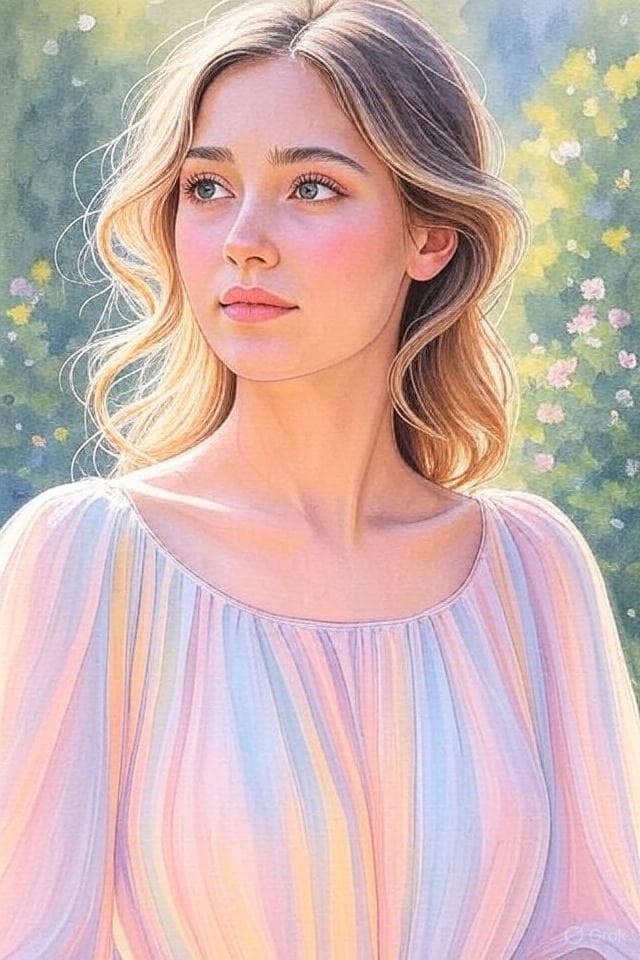
Watercolor's defining quality is its relationship with water — the way pigment blooms, bleeds, and flows in ways that can never be precisely controlled. This apparent limitation is actually watercolor's greatest strength: it produces soft edges, luminous washes, and organic textural effects that no other medium can replicate. When writing ChatGPT prompts for watercolor art, capturing this essential quality is the key to authentic-looking results.
Ready to start? Jump to the 12 complete templates below, or try one of these instant copy-paste prompts right now. For oil painting and pencil art, see our oil painting prompts guide and pencil drawing prompts.
5 Quick-Start Watercolor Prompts (Copy & Paste Now)
Use these immediately — no setup required:
Loose Botanical Watercolor
Watercolor illustration of [flower — peony/rose/wildflower] in loose contemporary
style. Technique: wet-on-wet blooms for petals, pigment allowed to spread naturally.
Paper texture visible throughout. Soft edges where wet areas meet. Preserved white
paper for brightest highlights. Palette: [pink and cream / deep red and green /
lavender and yellow]. No hard digital edges — genuine watercolor paper grain and
pigment behavior throughout.
Soft Landscape Sky
Watercolor landscape with dramatic wet-on-wet sky. Sky painted by dropping
[cerulean blue / warm ochre / stormy purple-gray] pigment into wet paper —
natural blooms and color merges. Horizon: simple land silhouette in wet-on-dry
technique. Paper texture visible in all light areas. Atmospheric, luminous,
immediate feeling. No flat digital fills — authentic watercolor behavior.
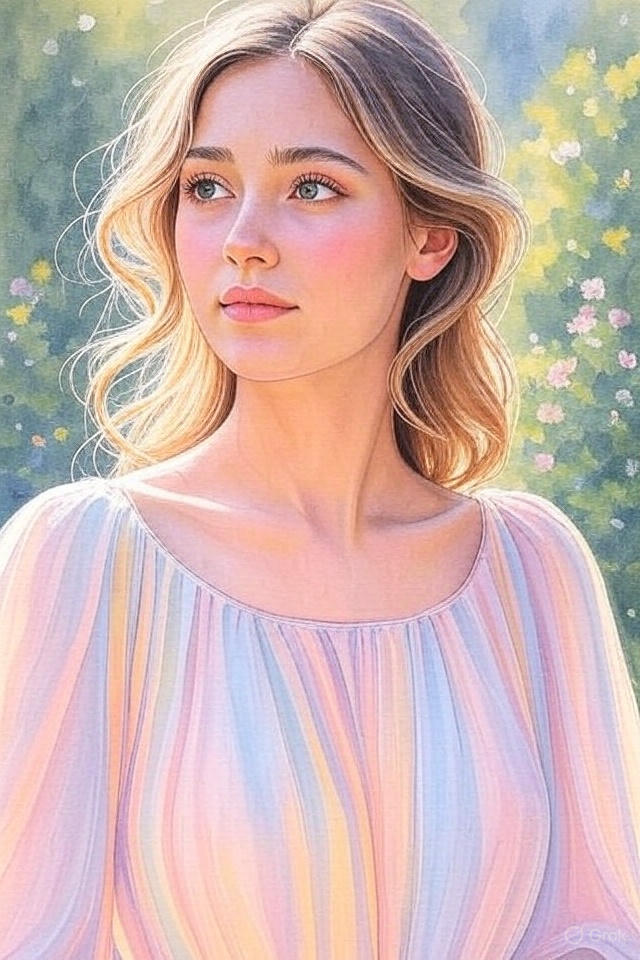
Loose Portrait with Flowers
Loose watercolor portrait of [subject description] surrounded by [peonies /
wildflowers / botanicals]. Technique: wet-on-wet background wash in [warm ochre /
cool lavender / soft rose], figure loosely rendered with soft edges blending
into background. Eyes as focal point — most resolved element. White paper preserved
as highlights on nose and forehead. Painterly, spontaneous quality.
Urban Sketch Watercolor
Urban sketching watercolor of [café street / old town building / harbor scene].
Style: ink lines first, then loose washes — confident slightly imperfect contours
with suggestive rather than complete color fills. Plenty of white paper. Limited
palette of 3 colors maximum. Figures as quick gestural marks. The freshness of
painting on location.
Abstract Color Bloom
Abstract watercolor exploring [specific color pairing — cobalt blue and burnt
sienna / cerulean and rose / viridian and cadmium yellow]. Large wet-on-wet
color fields — pigment dropped into wet areas and allowed to bloom freely.
Visible granulation, backruns, and blooms as deliberate artistic elements.
Strategic white paper as breathing space. Pure exploration of pigment behavior.
The Visual Language of Watercolor
Understanding these watercolor characteristics will make your prompts dramatically more effective:
Core Watercolor Techniques
Wet-on-wet: Paint applied to wet paper — creates soft, blooming edges, unexpected color merging, and organic shapes. The signature "wet" look of watercolor.
Wet-on-dry: Paint applied to dry paper — creates hard edges, more control, fine detail work. Used for crisp elements within a looser piece.
Flat wash: Even, consistent tone over an area — simple backgrounds, sky areas.
Graded wash: Tone changes from dark to light (or one color to another) smoothly across an area.
Dry brush: Nearly dry brush dragged across paper — creates broken, textured marks. Used for grass, hair, rough textures.
Blooms and backruns: When a wet area is touched with more pigment or water, creating beautiful cauliflower-like blooms.
Glazing: Transparent layers over dried previous washes — builds depth and color richness.
The White of the Paper
Unlike oil or acrylic painting, watercolor achieves whites by leaving the paper bare. Prompts should reference "preserved white paper for brightest highlights" rather than asking for white paint.
12 Watercolor Prompt Templates
1. Botanical Watercolor Illustration
Create a botanical watercolor illustration of [flower/plant/herb] in the tradition
of scientific botanical art updated for contemporary illustration. Technique:
Wet-on-dry for detailed contour work, wet-on-wet for soft atmospheric washes
in background. Linework: Fine pencil lines visible beneath transparent washes —
the traditional botanical illustration approach. Petal/leaf rendering: Multiple
layers of transparent washes building from light to dark. Veins: Preserved with
masking or careful painting around white paper. Background: Simple cream or white
paper — specimen study aesthetic. Color: Accurate botanical color — [specific
flower colors]. Detail level: Every stamen, petal vein, and leaf structure
rendered with care. Paper texture: Visible in lighter wash areas. Quality:
comparable to Royal Botanic Gardens illustration.
2. Loose Floral Portrait
Create a loose, contemporary watercolor portrait surrounded by or incorporating
[specific flowers — peonies/roses/wildflowers/botanicals]. Style: Modern loose
watercolor — confident, gestural strokes rather than tight rendering. Blooms:
Flowers painted wet-on-wet, pigment allowed to bloom and merge — loose and
expressive, not photographic. Figure: [Brief description] with loose portrait
treatment. Integration: Flowers and figure merge in places — soft edges where
they meet. Color palette: [Fresh/romantic/moody] — [specific colors]. Background:
Wash of [color] with wet-on-wet blooms creating depth. White preservation: Bright
highlights preserved as white paper — [flower centers/catchlights/rim highlights].
Character: The spontaneous, luminous quality of contemporary floral watercolor.
3. Landscape — Wet-on-Wet Sky
Create a landscape watercolor with a dramatic wet-on-wet sky. Technique: Sky
painted wet-on-wet — large quantities of water applied to paper first, then
pigment dropped in and allowed to move naturally. Sky result: Organic color
blooms, soft clouds, natural pigment flow creating [sunset/storm/clear blue/
dramatic overcast] atmosphere. Landscape below: [Wet-on-dry technique for
stronger edges of land forms]. Horizon line: Strong contrast between detailed
land and atmospheric sky. Color palette: [Specific atmospheric colors].
Composition: Sky occupying [50-70%] of the composition, landscape as anchor.
Details: [Trees/buildings/hills] rendered with confident dry brush or direct
marks. Paper texture: Visible throughout, especially in lighter areas.
4. Urban Sketch — Loose Architecture
Create an urban sketching watercolor of [city scene — café street, market,
old town building, harbor]. Style: Urban sketcher aesthetic — ink lines first,
then loose watercolor washes. Lines: Confident, slightly imperfect ink contours
suggesting architecture without mechanical precision. Washes: Loose and suggestive —
not every surface filled, plenty of white paper. Color: [Limited palette of
3-5 colors/complementary pair/warm-dominant]. Figures: Quick gestural marks —
suggested human presence, not detailed. Atmosphere: The freshness of sketching
on location — immediacy and life. Sky: Simple wash or left as white paper.
Shadow areas: Single transparent wash, not built up. Resist overfilling —
white paper is part of the composition.
5. Portrait — Traditional Loose Style
Create a watercolor portrait of [subject] using the traditional loose
watercolor portrait approach. Technique: Wet-on-wet for soft background
and transitions in skin, wet-on-dry for defining features. Skin: Transparent
washes building from light to dark, warm and cool tones playing against each
other. Eyes: Most resolved element — the focal point. Hair: Gestural marks
or wet-on-wet blooms rather than strand-by-strand detail. Background: Wet-on-wet
wash of [color] bleeding into the figure edges in places. Edges: Mix of hard
and soft — eyes and key features crisp, edges of face and hair soft and
suggestive. White preservation: Highlights on [nose/upper lip/forehead]
as preserved white paper. Color palette: [Warm/cool/romantic/dramatic].
Quality: The luminous spontaneity of a confident watercolor portrait.
6. Abstract Color Field Watercolor
Create an abstract watercolor exploring [emotion/concept/color relationship].
Technique: Large-scale wet-on-wet color mixing, allowing colors to bloom,
merge, and create unexpected transitions. Color palette: [Complementary
colors/monochromatic range/analogous harmony] — [specific colors]. Technique
effects: Blooms, backruns, granulation, pigment separation visible as
deliberate artistic elements. Salt texture: [Optional] salt-scatter effects
creating crystalline texture in some areas. White: Strategic white paper
preserved as visual breathing space. Composition: [Color masses occupying
specific areas]/flowing from [direction] to [direction]. Mood: [The specific
emotional quality of this color interaction]. No representational content —
pure exploration of pigment and water behavior.
7. Wildlife — Animal in Natural Environment
Create a watercolor painting of [specific animal] in [natural habitat].
Technique approach: Animal rendered with more precision and detail, environment
treated more loosely. Subject: [Animal] in [specific pose/action]. Fur/feathers:
Rendered with directional dry brush strokes and careful wet-on-wet for soft
transitions. Eyes: Carefully rendered with preserved white highlights.
Habitat: Loose, impressionistic — suggests environment without competing with
subject. Background: Soft wet-on-wet washes of [seasonal colors]. Color
accuracy: Faithful to actual animal coloring. Integration: Subject and
environment share edges in some areas — not artificially separate. White
paper highlights: On [lightest fur/feathers/eye highlights]. Style: Wildlife
watercolor illustration quality — [similar to field guide illustration/
gallery wildlife painting].
8. Children's Book Illustration Style
Create a watercolor illustration in children's picture book style featuring
[subject — character, scene, or concept]. Character: [Description] with the
warm, approachable quality of beloved picture book art. Style reference:
[Beatrix Potter/Maurice Sendak/Eric Carle/Eric Fan/modern picture book].
Technique: Clean watercolor washes with visible brush marks adding warmth.
Line work: [Black ink outlines/pencil lines/pure watercolor without outlines].
Color palette: [Warm and inviting/adventurous and bright/soft and dream-like].
Details: Whimsical and specific — the kinds of details children discover on
repeated viewing. Environment: [Scene description] rendered with the same
attention as the character. Mood: [Cozy/adventurous/magical/warm].
Text space: [Optional: leave space for text at top/bottom/side].
9. Seascape and Water Studies
Create a watercolor seascape capturing [specific water moment — crashing wave/
still harbor/misty morning/sunset on water]. Technique advantage: Watercolor's
relationship with water makes it the ideal medium for depicting water.
Waves: [If present] rendered with wet-on-wet technique — the medium mirrors
the subject. Foam: White paper preserved, with occasional wet-on-wet softening.
Sky reflection: Water reflects sky colors with slight darkening and distortion.
Depth: Transparent washes create the luminous depth of water. Horizon line:
Clean, strong line dividing sea from sky. Color palette: [Specific ocean colors —
blue-grays and greens/warm sunset colors/cool morning blues]. Atmosphere: The
light quality of [specific time and weather]. Painting gesture: Should feel
fresh and immediate — painted before the light changed.
10. Architectural Watercolor — Plein Air Style
Create a watercolor painting of [architectural subject — historic building,
cathedral, old street, bridge] in the plein air architectural watercolor
tradition. Structure: Building or structure as primary subject, rendered
with respect for its architectural character. Lines: [Pencil framework visible/
pure watercolor/ink and wash]. Perspective: Correct architectural perspective
as if observed on location. Atmosphere: [Time of day light] affecting color
temperature of stone, glass, and sky. Shadows: Single transparent wash placed
confidently — shadow creates three-dimensional reading. Foreground: [People/
trees/street elements] rendered more loosely than architecture. Sky: Simple
or dramatic depending on composition needs. Color palette: [Stone colors/
warm afternoon/cool blue sky/twilight]. Quality: Serious architectural
watercolor — not casual sketch but accomplished plein air study.

11. Fashion Illustration Watercolor
Create a fashion illustration in loose watercolor style of [clothing/styling
description] on [model description]. Proportion: Fashion illustration proportion —
elongated, approximately 9-10 heads tall. Technique: Confident, gestural washes
suggesting fabric rather than detailing it. Fabric quality: [Specific fabric
character — silk fluidity/denim texture/delicate sheer] suggested by watercolor
technique choice. Color: [Brand palette/specific fashion colors]. Face: Minimal
treatment — large eyes, simplified features in fashion illustration tradition.
Hair: Loose gestural marks. Background: [White paper/simple wash/abstract color].
Energy: Should feel like the model is in motion. Ink: [Optional: black ink
lines over washes or before them]. Style: Contemporary fashion illustration —
not detailed but powerfully evocative of the clothing's essence.
12. Night Scene — Dark and Luminous
Create a night scene watercolor of [specific night setting — lit window,
street lamp scene, starry sky, city lights]. Technique challenge: Watercolor
typically works light to dark, but night scenes require preserving light
against dark backgrounds. Approach: Dark background washes surround preserved
white paper and lighter areas creating luminosity. Light sources: [Warm windows/
street lamps/moon/stars] as islands of warmth in dark washes. Sky: Deep [blue/
purple/black] achieved through multiple transparent glazes. Warm/cool contrast:
Warm light sources against cool night atmosphere — the essential night scene
tension. Reflections: [If wet street/water] reflections of warm light in dark.
Color palette: [Deep night blues and purples with warm amber and gold light].
Atmosphere: The specific quality of artificial light at night — how it transforms
and makes ordinary things luminous.
Watercolor-Specific Prompt Tips
The Single Most Important Phrase
Adding "paper texture visible, wet-on-wet blooms and soft edges throughout" to any watercolor prompt dramatically improves authenticity. Without it, AI tends toward overly clean, digital-looking results.
Describing What NOT to Have
"No hard digital edges, no flat vector-style color fills, no photographic crispness — genuine watercolor paper grain and pigment behavior throughout"
This negative description steers AI tools away from the most common watercolor failure mode.
Specifying Paper Type
Different papers create different textures:
- Arches cold press: Medium texture, industry standard
- Hot press: Smooth, for fine detail work
- Rough: Heavy texture, expressive loose work
Related Resources
- ChatGPT Oil Painting Prompts Guide — Compare watercolor to oil painting aesthetics
- ChatGPT Pencil Drawing Prompts — Traditional drawing techniques
- Fantasy Art Prompts — Apply watercolor style to fantasy subjects
- ChatGPT 4K Image Prompts Guide — Stack quality modifiers for ultra-sharp, high-detail watercolor outputs
Conclusion
Watercolor prompts succeed when they capture the medium's essential character: the soft blooms, the luminous transparency, the happy accidents of wet pigment meeting wet paper. The 12 templates here guide you toward authentic watercolor aesthetics across every subject — from tight botanical illustration to completely abstract color exploration.
The key phrase to remember: watercolor is about what you leave, not what you add. The white paper, the soft edge where control was released, the bloom that wasn't planned — these are what make watercolor beautiful. Let your prompts reflect that philosophy.