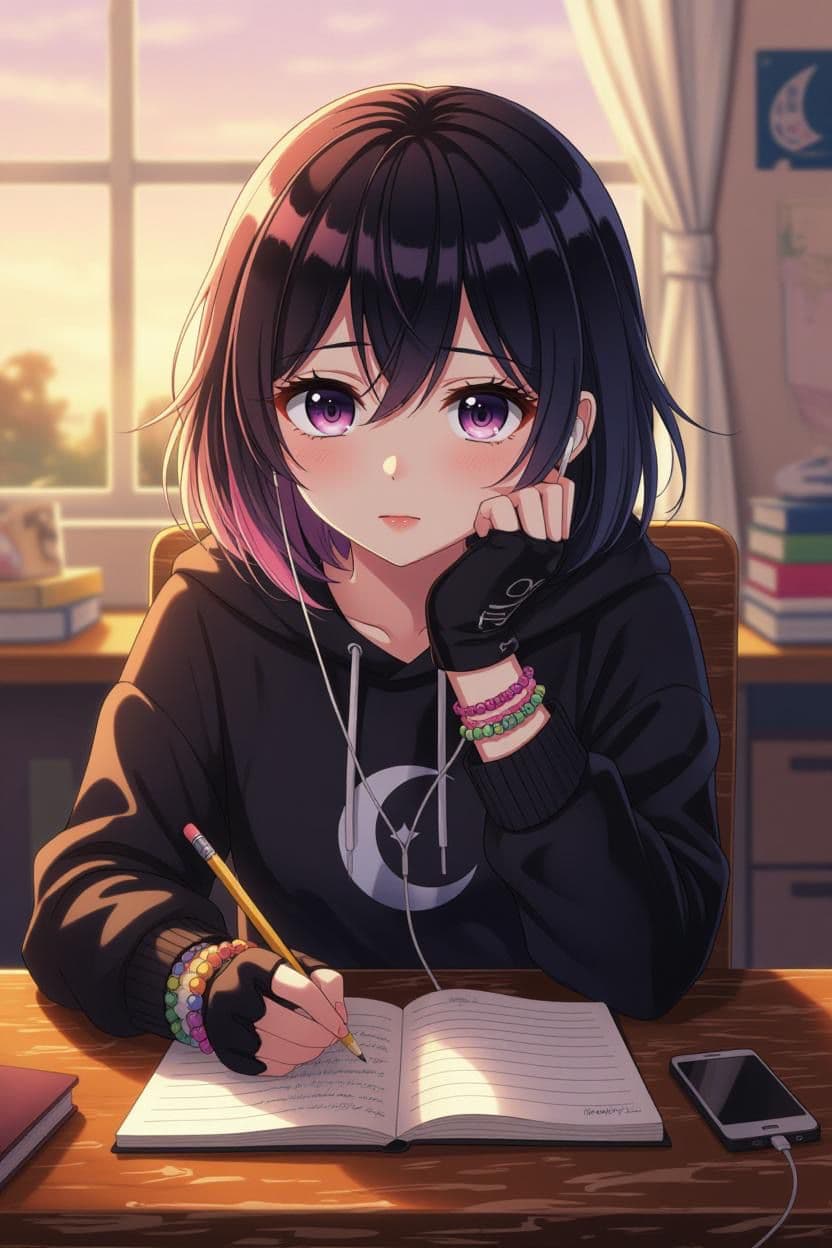
Anime art has one of the largest and most passionate communities in AI image generation. From the delicate linework of shojo to the explosive energy of shonen action scenes, anime encompasses dozens of distinct visual styles — each with its own conventions, color palettes, and character design philosophies. These 15 ready-to-use ChatGPT prompts cover the full spectrum of anime aesthetics, giving you templates for characters, environments, and scenes across every major genre.
Understanding Anime Art Styles in AI Prompts
The Key Visual Characteristics of Anime
Before diving into templates, understand what makes anime visually distinctive:
- Stylized Eyes: Large, detailed eyes with reflective highlights are the signature of most anime styles
- Simplified Anatomy: Exaggerated proportions — large heads, slim bodies, long legs
- Linework: Clean, confident outlines defining forms (cel-shading approach)
- Flat Color Areas: Large areas of solid color with minimal texture (unlike Western illustration)
- Speed Lines: Dynamic action indicated by motion lines
- Emotional Expressions: Stylized emotional states (sweat drops, chibi moments, dramatic close-ups)
- Background Contrast: Highly detailed environments contrasting with simplified characters
Major Anime Art Style Categories
| Style | Examples | Visual Signature |
|---|---|---|
| Shonen | Naruto, Dragon Ball, One Piece | Bold lines, dynamic action, muscular |
| Shojo | Sailor Moon, Fruits Basket | Delicate lines, flowers, sparkles |
| Seinen | Attack on Titan, Berserk | Mature, darker palette, realistic proportions |
| Mecha | Gundam, Evangelion | Mechanical detail, dramatic scale |
| Isekai | Re:Zero, Sword Art Online | Fantasy environments, RPG aesthetics |
| Slice of Life | Your Name, Spirited Away | Realistic backgrounds, soft character designs |
| Studio Ghibli | Spirited Away, Princess Mononoke | Painterly backgrounds, warm colors |
| Cyberpunk Anime | Ghost in the Shell, Akira | Neon, rain, dark atmosphere |
Anime Prompt Templates
1. Shonen Hero Character
Create a shonen anime character design for [character concept]. Style: Bold,
confident shonen art style similar to [Naruto/Dragon Ball/My Hero Academia].
Character: [age, gender, personality]. Hair: [wild/spiky/flowing] hair in
[color] with dynamic movement. Eyes: Large, determined [color] eyes with
bright highlights conveying strength and will. Expression: [fierce/determined/
confident]. Clothing: [outfit description] with [distinctive accessory or
symbol]. Pose: Dynamic action pose suggesting power and forward momentum.
Background: [simple color gradient/speed lines/environmental context].
Art style: Clean cel-shading with bold linework, flat colors with minimal
shading gradients. Full character turnaround or three-quarter view.
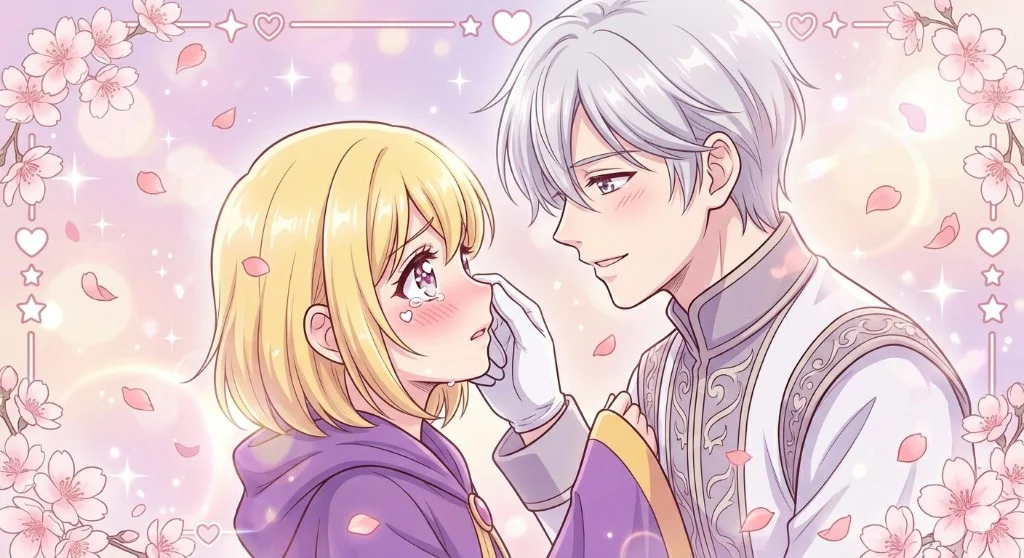
2. Shojo Romance Scene
Create a romantic shojo anime scene featuring [characters and setting].
Style: Delicate shojo art style with soft, expressive linework. Visual
elements: Soft pastel color palette — pinks, lavenders, creams. Background:
[spring flowers/sparkles/soft bokeh] creating dreamy atmosphere. Characters:
[description] with large, glistening eyes and elegant features. Emotional
quality: [tender moment/first meeting/dramatic confession]. Special effects:
Rose petals, sparkles, lens flare effects typical of shojo manga adaptations.
Linework: Fine, graceful lines with varied weight creating delicate feeling.
Layout: [close two-shot/single dramatic close-up/medium establishing shot].
Color: Soft and harmonious with emphasis on pinks and cool whites.
Try our Anime Landscape Scene Generator →
3. Mecha Battle Scene
Create a dramatic mecha anime battle scene in the tradition of [Gundam/
Evangelion/Code Geass]. Scale: Massive mechanical suits of [scale] engaged
in [battle type]. Environment: [urban ruins/space/ocean/desert]. Mecha design:
[color scheme and general design aesthetic — angular/organic/military]. Action:
[specific action — beam weapon fire/melee combat/defensive maneuver]. Lighting:
Dramatic backlighting, explosion flashes, energy weapon glow. Background:
Chaos of battle — debris, explosions, smoke. Perspective: Dynamic [low angle
emphasizing scale/dramatic aerial/cockpit point of view]. Style: Detailed
mechanical cel-shading with emphasis on hard surfaces and light reflection.
Speed lines and impact effects conveying massive scale of combat.
4. Studio Ghibli Landscape
Create a landscape in the painterly style of Studio Ghibli films (Spirited Away,
Princess Mononoke, Howl's Moving Castle). Setting: [environment description].
Atmosphere: Warm, magical-realist lighting typical of Ghibli — afternoon golden
light or dramatic twilight. Sky: [Ghibli-style detailed sky — layered clouds,
warm sunset tones, or moody overcast]. Vegetation: Lush, detailed plant life
with Ghibli's characteristic attention to natural detail. Architecture: [If
present] hand-painted, slightly stylized buildings with lived-in quality.
Color palette: Rich, warm and atmospheric — the Ghibli color signature of
deep greens, warm yellows, sky blues. No characters, focus on environmental
storytelling. Painterly texture: Visible brushwork similar to traditional
cel-painted animation background art.
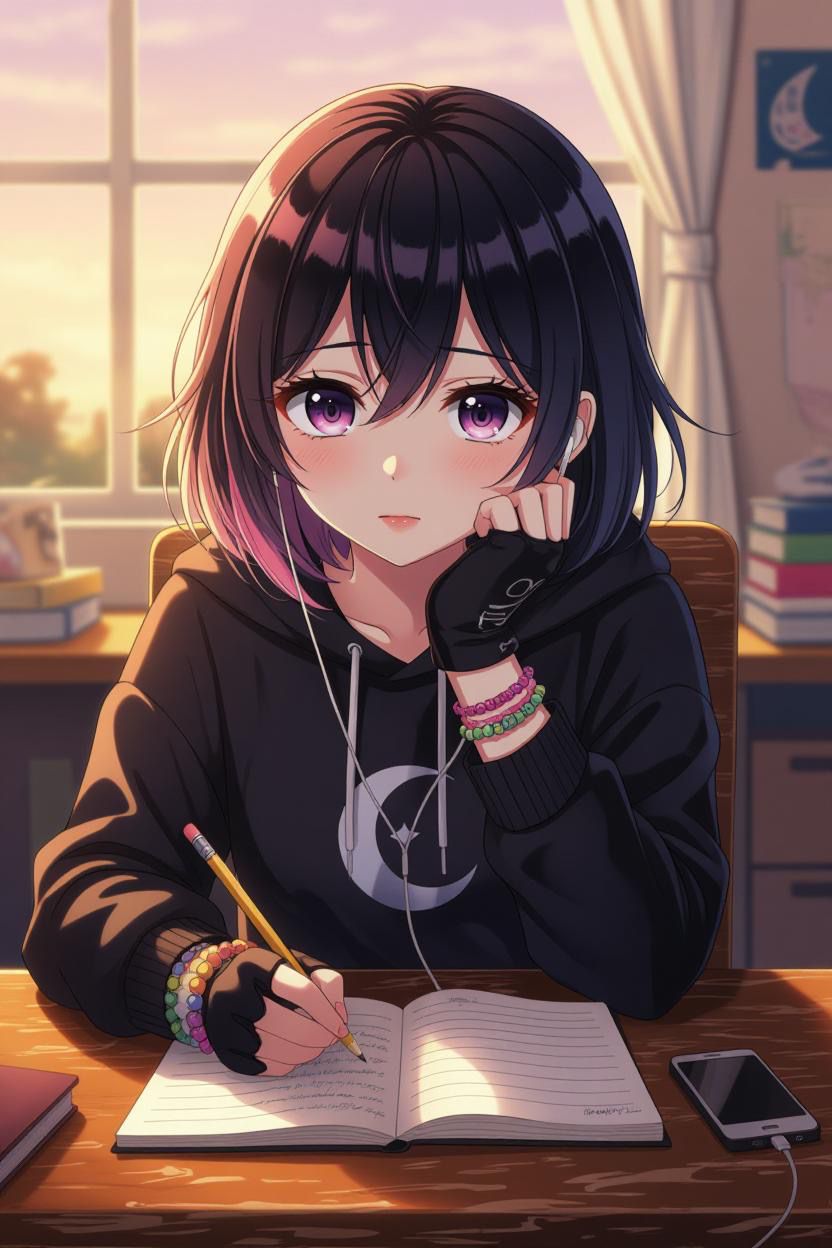
5. Cyberpunk Anime City
Create a cyberpunk anime city scene in the tradition of Ghost in the Shell,
Akira, or Cyberpunk: Edgerunners. Time: Night. Atmosphere: Rain-slicked streets,
neon reflections, dense urban layering. Lighting: Neon signs in [Japanese/mixed/
English] casting colored light — dominant [color scheme: cyan and magenta/
orange and blue/red and green]. Buildings: Layered urban architecture mixing
ancient and ultra-modern. Street level: [bustling crowd/empty rain-soaked street/
chase scene]. Sky: Polluted haze with visible neon glow. Characters: [Optional
figure in foreground]. Style: Anime cel-shading adapted for cyberpunk aesthetic,
detailed background with stylized characters. Mood: Atmospheric, melancholy,
electric with possibility and danger.
6. Fantasy RPG Party
Create an anime-style fantasy RPG party group shot. Party members: [4-6 characters
with class descriptions — warrior, mage, healer, rogue, archer]. Style: Isekai/
fantasy RPG anime aesthetic similar to [Sword Art Online/Re:Zero/Overlord/
That Time I Got Reincarnated as a Slime]. Composition: Group gathered suggesting
camaraderie and different roles. Background: [Fantasy environment — forest clearing/
town/dungeon entrance]. Character designs: Each with visually distinct costume,
weapon, and personality reflected in design. Color coding: Each character with
distinct color scheme suggesting their class and personality. Art style: Clean
anime linework with detailed equipment and fantasy costume elements. Lighting:
Warm, adventurous quality suggesting epic quest beginning.
7. Magical Girl Transformation
Create a magical girl transformation sequence or iconic pose in the tradition of
Sailor Moon, Cardcaptor Sakura, or Precure. Character: [magical girl description].
Transformation elements: Dynamic pose with [specific magical elements — stars/
flowers/ribbons/light beams]. Costume: [costume description] with distinctive
magical accessories. Expression: Determined or triumphant. Background: Magical
transformation effects — [glowing orb/star burst/spiral energy]. Color palette:
[character's signature colors]. Style: Authentic magical girl anime aesthetic —
sparkles, pastel tones, dynamic ribbons and hair movement. Lighting: Self-luminous
magical quality with colored light from transformation. Text overlay: [Optional:
character's name and magical title in stylized font].
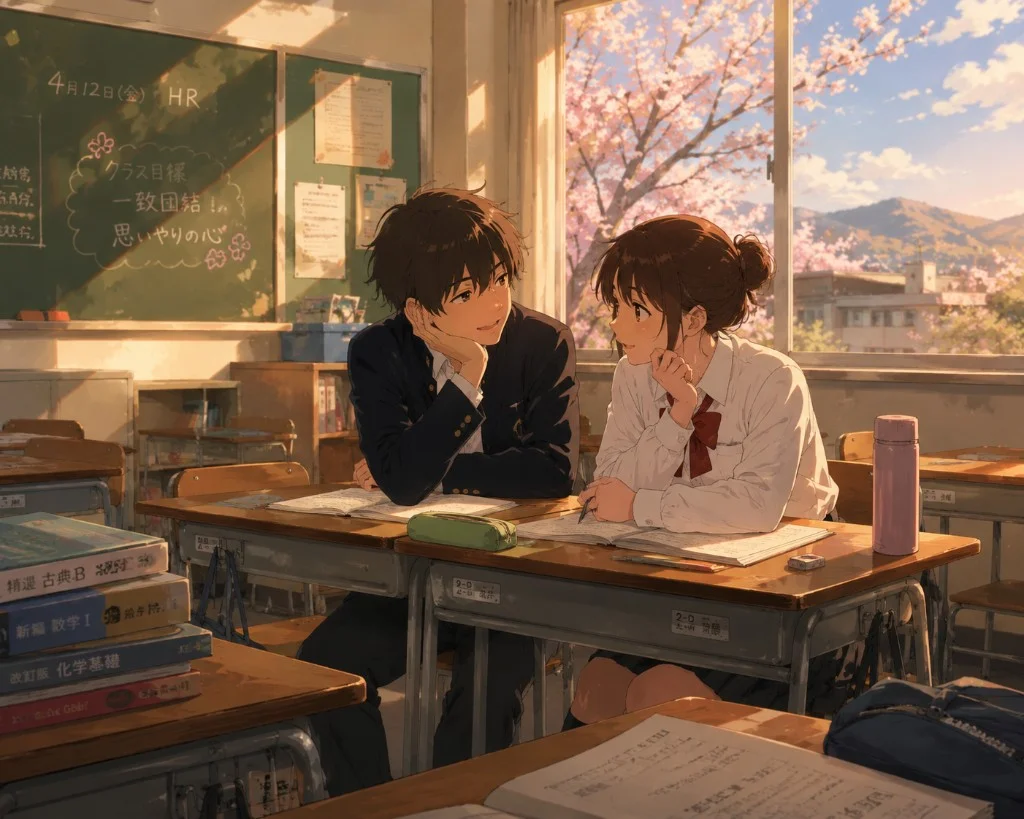
8. Slice of Life Scene
Create a slice of life anime scene capturing an everyday moment with warmth
and nostalgia. Setting: [specific location — high school classroom/café/
train/bedroom/convenience store at night]. Characters: [1-3 characters in
natural interaction]. Moment: [specific everyday moment — studying together/
eating lunch/walking home/looking at sunset]. Style: Clean, warm anime linework
with attention to environmental detail (backgrounds as detailed as characters).
Color palette: Warm and inviting — natural daylight colors, cozy interior tones.
Atmosphere: The bittersweet beauty of ordinary moments. Details: Background
details tell story — books, food, seasonal indicators. Season: [spring/summer/
autumn/winter] indicated by environment. Mood: Nostalgic, warm, emotionally resonant.
9. Battle Spirit / Power-Up Moment
Create an anime power-up or battle spirit moment — the iconic climactic scene
of shonen anime. Character: [protagonist description] experiencing [power awakening/
final form/emotional breakthrough]. Visual effects: Massive aura expanding from
character — [color of power aura]. Energy: [lightning/fire/wind/spiritual energy]
swirling around character. Expression: Intense, tears possible, overwhelmed by
power. Background: [disintegrating/shaking/blown away] by the force of power.
Light: Dramatic backlighting with power glow as primary light source. Speed lines:
Radiating from character outward. Intensity level: Maximum dramatic impact —
this is the moment everything changes. Style: Peak shonen battle art with all
the visual vocabulary of anime climax moments.
10. Anime Nature / Sakura Scene
Create a beautiful anime nature scene featuring [cherry blossoms/autumn leaves/
first snow/summer fireworks] with [character description if desired]. Setting:
[specific location — shrine pathway/riverside/school courtyard/traditional street].
Season: [spring sakura/autumn koyo/winter yuki/summer natsu]. Style: Clean
anime aesthetic with Ghibli-influenced background detail. Falling [petals/leaves/
snowflakes]: Rendered beautifully in motion. Lighting: [Soft spring afternoon/
dramatic sunset/evening twilight] with appropriate color temperature. Atmosphere:
Quiet beauty, the impermanence of beautiful moments (mono no aware). Color palette:
[Season-appropriate — pinks and whites/reds and oranges/cool blues/warm golds].
If characters present: Contemplative or peaceful expression, taking in the moment.
11. Isekai Dungeon Scene
Create an anime dungeon exploration scene in the isekai/RPG aesthetic. Setting:
[dungeon type — ancient ruins/crystal cave/undead catacomb/elemental dungeon].
Characters: [party composition] in [combat/exploration/discovery] stance.
Lighting: Dramatic dungeon lighting — [torch glow/magical crystal light/
bioluminescence]. Monster/Challenge: [enemy or environmental obstacle if desired].
Environmental detail: Elaborate dungeon architecture with [specific stone/crystal/
magical] aesthetics. Status effects: [Optional: visible HP bars, status effect
icons, skill activation effects in anime style]. Color palette: [Atmospheric
dungeon colors — blue-purple for underground, warm torch orange, eerie green].
Action moment: [Specific scene — boss encounter/treasure discovery/dramatic escape].
Art style: Detailed anime RPG aesthetic with clear fantasy game visual language.
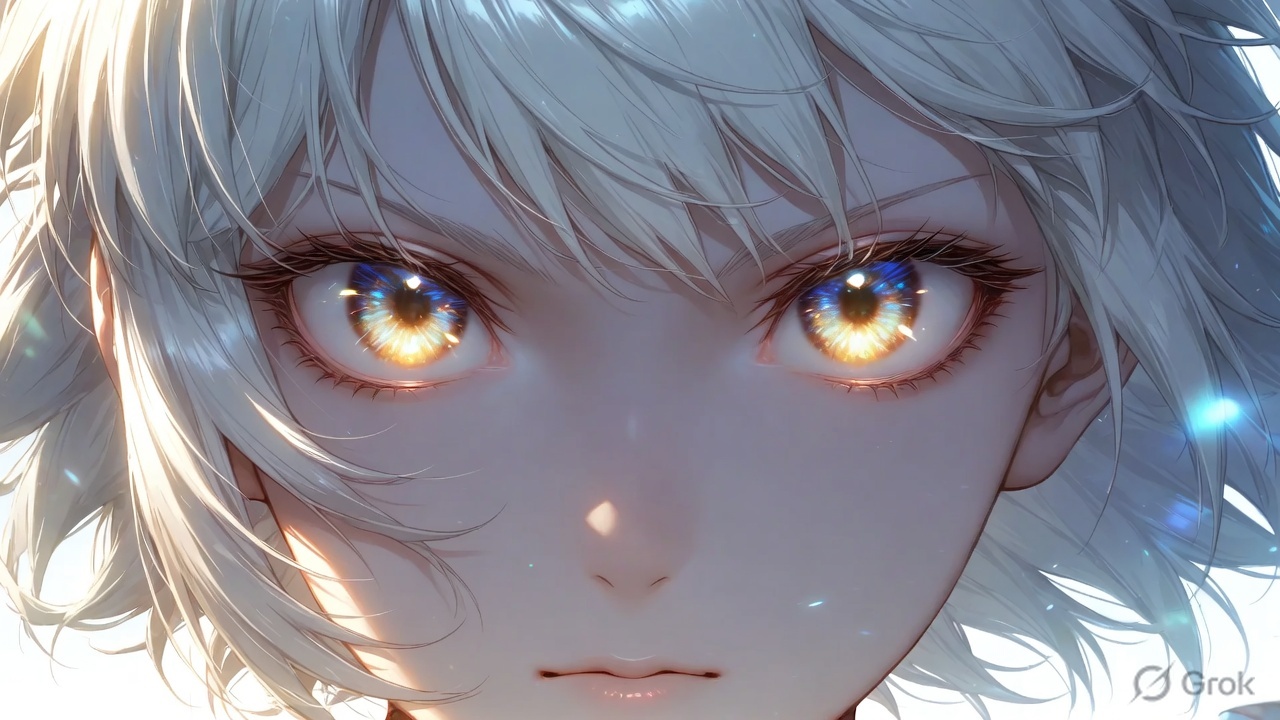
12. Anime Portrait — Character Close-Up
Create a detailed anime character portrait close-up of [character description].
Face: Large, expressive anime eyes with [color] iris, detailed highlights
creating depth and emotion. Hair: [style and color] with characteristic anime
hair gravity — flowing, detailed, with individual strand definition. Expression:
[specific emotion — determined/melancholy/joyful/mysterious]. Skin: Clean anime
rendering with subtle shading. Distinctive features: [specific visual elements
that define this character]. Background: [simple color gradient/out of focus
environment/symbolic elements]. Lighting: [Dramatic side light/soft frontal/
atmospheric]. Art style: High-quality anime production art — the quality of key
animation frames. Frame: Head and shoulders, centered composition, character
filling frame confidently.
13. Anime Aerial City Establishing Shot
Create an aerial establishing shot of an anime city in the style of [specific
anime — Tokyo from Your Name/Neo-Tokyo from Akira/coastal town from Spirited Away].
City type: [Modern Tokyo-inspired/fantasy city/coastal village/futuristic metropolis].
Perspective: [Bird's eye view/dramatic low aerial/sweeping panorama]. Time: [Morning
golden hour/twilight blue hour/night with city lights]. Sky: Atmospheric [clouds/
clear/dramatic weather]. Detail: Intricate cityscape with recognizable Japanese
urban elements — train lines, residential districts, commercial areas, parks.
Color palette: [Realistic urban tones/saturated anime palette/moody atmospheric].
Atmosphere: [Peaceful and beautiful/ominous and vast/nostalgic and warm].
Style: Studio Ghibli-quality background painting detail applied to cityscape.
14. Anime Action Sequence Frame
Create a dynamic anime action sequence frame capturing peak moment of combat.
Characters: [attacker and defender descriptions]. Action: [specific attack or
defense — sword slash/energy blast/martial arts kick/magical spell]. Motion
effects: Speed lines, impact particles, motion blur on moving elements. Expression:
Intense battle focus, teeth gritted, eyes wide. Impact point: Dramatic moment
of contact — energy explosion, impact flash, debris. Composition: Dynamic
diagonal composition suggesting force and movement. Perspective: [Low angle
making action bigger/close to emphasize intensity/wide to show scale]. Style:
Peak anime action art — the quality of fight scene key frames. Color: Action
effects in [character's signature color scheme].
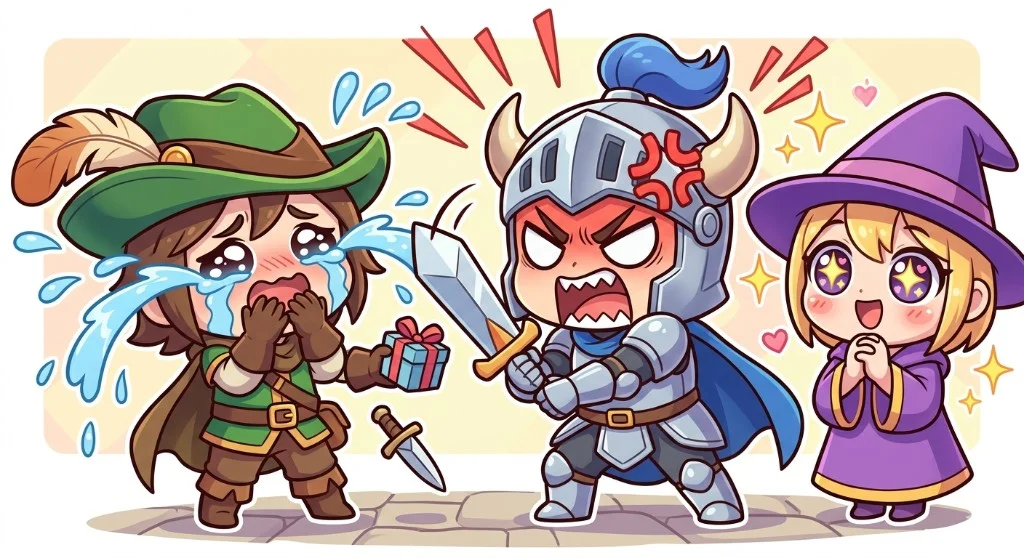
15. Chibi / Super-Deformed Characters
Create chibi/super-deformed (SD) versions of [character descriptions]. Style:
Extreme chibi exaggeration — head 1/2 to 1/3 of body height, stubby limbs,
simplified features retaining character essence. Expression: [Specific exaggerated
emotion — rage with veins/tears with dramatic despair/sparkle-eyed excitement].
Details: Costume simplified but key identifying elements retained. Interaction:
[Characters in specific cute or comedic situation]. Background: [Simple color
background/matching chibi environment/reaction lines]. Color: Bright, saturated
chibi palette. Quality: Official merchandise quality SD character art. Multiple
characters: [If group] same size and style, clearly interacting.
Trending Anime Style Prompts (2026)
These five styles dominate current anime fandom and have specific visual signatures that generic "anime style" prompts miss entirely. Each template targets the exact aesthetic of that franchise.
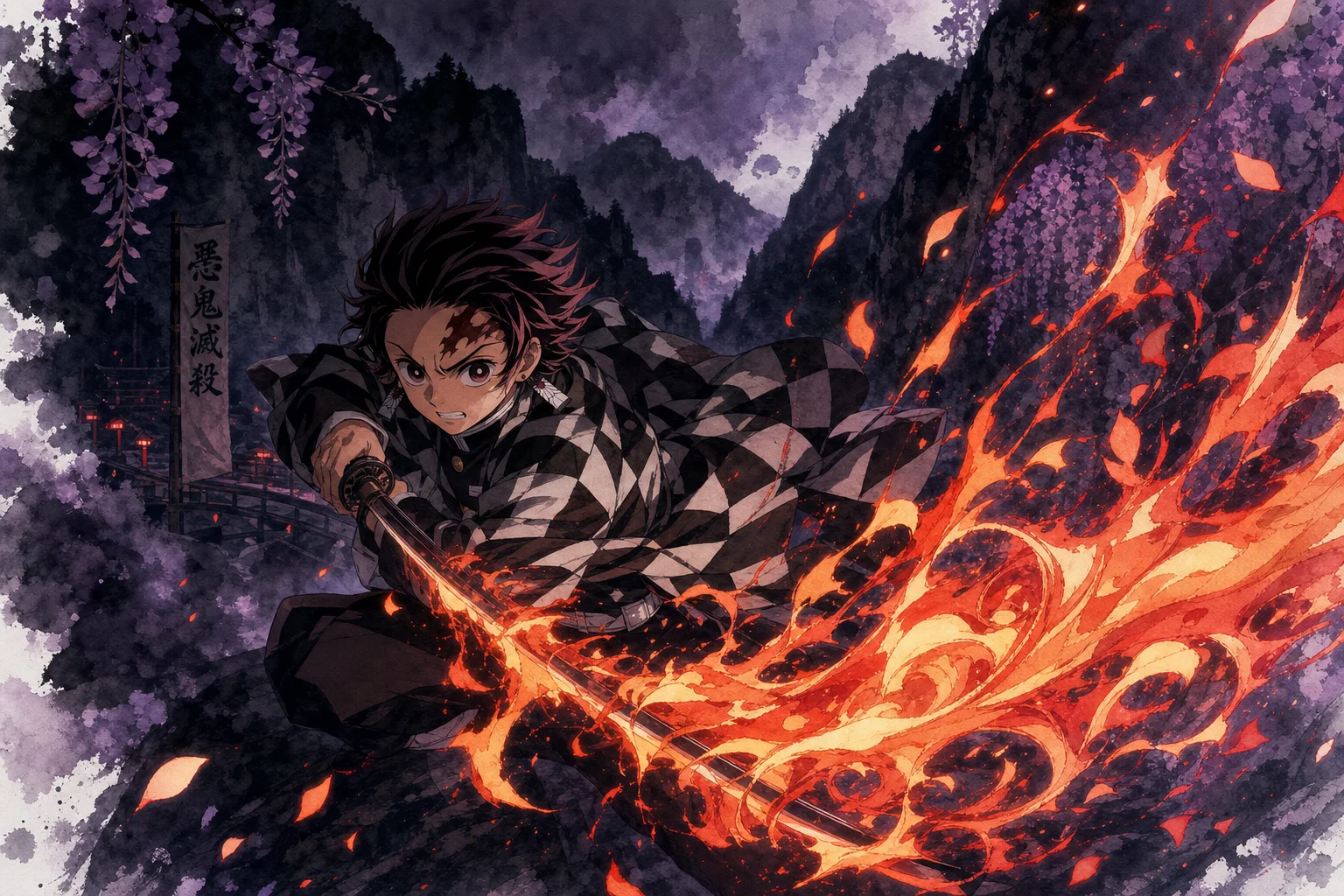
16. Demon Slayer Style
Create an anime scene in the Demon Slayer (Kimetsu no Yaiba) art style by ufotable. Character: [character description] performing [Breathing Technique — flame/water/wind/thunder/mist]. Visual signature: Watercolour wash backgrounds with soft ink-bleed edges, wisteria purple and deep black as dominant palette with vivid [flame-orange/water-blue/thunder-yellow] for technique effects. Breathing technique: Rendered as flowing, stylised energy patterns — [flame in jagged petal shapes/water in flowing ribbon curves/thunder as zigzag electricity] emanating from sword or body. Character design: Clean linework, period-accurate Taisho-era clothing with haori detail. Background: [mountain pass/burning building/misty forest/demon domain] rendered in ufotable's signature painterly style. Lighting: Dramatic contrast — dark environment with technique providing the primary coloured light source. Style: ufotable animation quality, theatrical film standard.
17. Jujutsu Kaisen Style
Create an anime scene in the Jujutsu Kaisen art style. Character: [sorcerer or curse description] unleashing [Domain Expansion/cursed technique name]. Visual signature: Gritty urban Tokyo setting with photorealistic backgrounds contrasting against stylised characters. Cursed energy: Rendered as black jagged outlines with [purple/blue/red] translucent fill, crackling at the edges. Atmosphere: Dark, oppressive — heavy shadows, desaturated environment palette broken only by cursed energy colour. Expression: Intense, battle-worn, resolve in the face of extreme danger. Technique effect: [specific domain or technique visual — Infinity shimmer/Domain interior floor and ceiling pattern/cursed flame shape]. Background: [Shibuya crossing/abandoned school/cursed spirit's domain with distinctive floor pattern]. Art quality: MAPPA animation studio theatrical quality. Linework: Bold, confident, slightly rough — not the clean softness of shojo.
18. Chainsaw Man Style
Create an image in the Chainsaw Man anime art style by MAPPA. Aesthetic: Deliberately gritty, desaturated palette inspired by live-action horror cinematography. Character: [character description] in [action/emotional scene]. Colour palette: Muted browns, greys, and dark greens as base — broken by vivid blood red, chainsaw orange, or devil contract glow. Composition: Live-action-inspired framing — handheld-camera feel, unusual angles, close cropping that feels uncomfortably intimate. Devils/powers: [chainsaw blades emerging from body/fire explosion/darkness tentacles] rendered with practical-effects weight — they feel physical and dangerous, not magical. Lighting: Harsh, unflattering — fluorescent interior, gritty street lighting, or fire. Mood: Bleak, visceral, occasionally absurdist. Background: Mundane Tokyo environments — convenience store, apartment stairwell, street — made sinister by context. Style: MAPPA's gritty theatrical production quality, not the clean idealism of shonen.
19. Frieren — Ethereal Fantasy Style
Create a scene in the art style of Frieren: Beyond Journey's End (Frieren at the Funeral). Visual signature: Soft, muted palette suggesting ancient passage of time — faded greens, dusty greys, warm cream, pale gold. The world feels old and lived-in. Character: [character description, preferably Frieren or party member] in a [moment of quiet reflection/magic practice/journey scene]. Atmosphere: Melancholic, serene — the loneliness of a long-lived being in a world that moves on. Backgrounds: Highly detailed medieval European-inspired environments — overgrown ruins, quiet villages, long roads through wilderness — painted with visible brushwork texture. Magic: Soft, muted glow rather than explosive effects — [green mana circles/silver frost/subtle light]. Lighting: Diffuse overcast light or soft golden afternoon, no harsh contrast. Mood: Bittersweet beauty, the quiet weight of centuries. Art quality: Madhouse animation studio theatrical quality. Style: European medieval fairy-tale filtered through Japanese anime sensibility.
20. One Punch Man Style
Create an anime scene in the One Punch Man art style. Scene type: [Saitama in mundane situation/S-class hero battle/monster fight]. Visual signature: Deliberate stylistic contrast — protagonist Saitama rendered in intentionally simple, flat design (round head, basic features, minimal shading) while [monster/environment/other heroes] is drawn in hyper-detailed, extremely dynamic, muscular realism. This contrast is the core visual joke and aesthetic. Hero design: [Simple flat Saitama / highly detailed muscular hero]. Monster: [Description] rendered with maximum anatomical detail, rage expression, dynamic action pose. Background: Destroyed city environment with rubble, craters, collateral damage rendered in meticulous detail. Action: If battle — impact frame with radiating shockwave, debris field, atmospheric distortion from the force of a single punch. Art quality: Madhouse/J.C. Staff animation quality. Linework: Varies by element — simple for Saitama, hyper-detailed for everything else.
High-Search Anime Prompt Types
These prompt formats target the most commonly searched anime AI art requests — use cases like profile pictures, character sheets, and wallpapers that people search for by name.
21. Anime Character Sheet / Turnaround
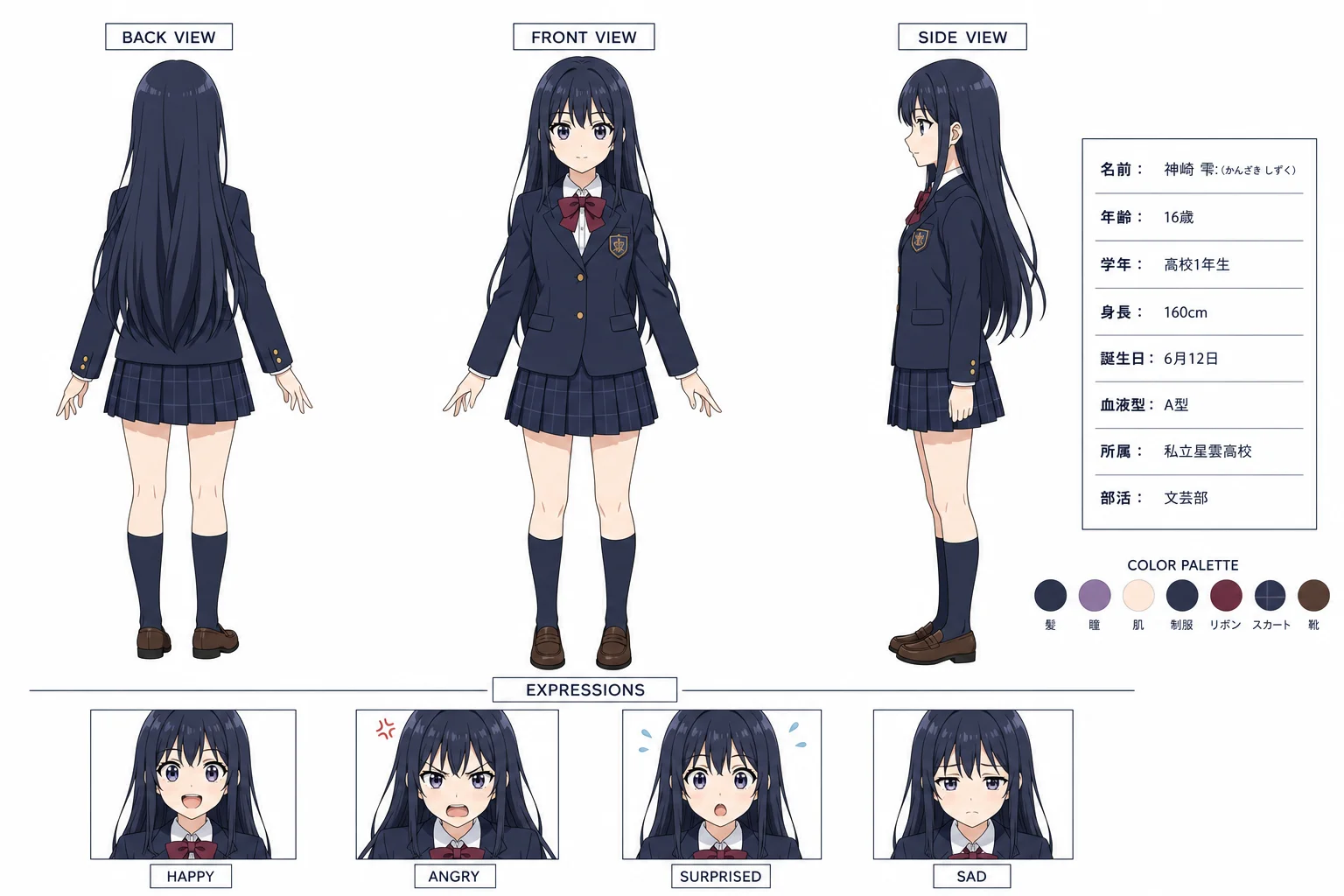
The most searched anime prompt on art-generation sites. A character sheet shows your character from multiple angles for design consistency.
Create an anime character design sheet for [character description: name, age, gender, personality]. Layout: Three-view turnaround on a clean white background — front view (centre, largest), side profile (right), back view (left). All three views at the same scale and lighting. Character details: [hair colour/style, eye colour, clothing/outfit description, distinctive accessories or weapons]. Pose: Neutral standing pose, arms slightly away from body to show clothing clearly — not a hero pose. Expression: Neutral on turnaround views, plus a separate small expression sheet below showing [happy/angry/surprised/sad] variants. Label each view. Art style: Clean anime linework, flat colour with minimal shading for clarity. This is a design reference sheet, not an illustration — clarity and consistency across all views is more important than drama or atmosphere.
22. Anime Profile Picture / PFP
Create an anime profile picture / avatar for use on social media. Subject: [character description — gender, hair, eye colour, personality]. Crop: Tight portrait, bust-to-head crop, centred — the face fills at least 60% of the frame. Expression: [confident and cool/warm smile/serious/mysterious — choose one]. Eye detail: Highly detailed anime eyes — [colour], large catchlights, soft gradient iris, visible lashes. Hair: [colour and style] framing the face naturally, a few strands falling across forehead. Lighting: Soft front lighting with a subtle [rim light colour] edge — makes the subject pop from background. Background: Simple [gradient/bokeh/plain colour] — nothing that competes with the face. Art quality: Professional anime illustration, clean linework, polished colouring. Square crop composition, 1:1 ratio.
23. Anime Widescreen Wallpaper
Create a cinematic anime widescreen wallpaper (16:9 landscape composition). Scene: [scene description — location, time of day, atmosphere]. Subject: [character(s) or landscape — character in foreground, world in background]. Composition: Subject positioned in lower-left or lower-right third of frame, leaving sky/horizon as the dominant visual. Lighting: [Golden hour sunset / Blue-hour twilight / Moonlit night / Overcast dramatic sky / Dawn]. Colour palette: [Warm oranges and pinks / Cool blues and purples / High-contrast black and gold / Muted greens and fog]. Mood: [Epic and awe-inspiring / Melancholic and lonely / Peaceful and serene / Ominous and foreboding]. Sky: Detailed — clouds, stars, atmospheric haze, or weather effect. Background: [Specific setting — city skyline / mountain range / ocean / ancient ruins / fantasy landscape]. Art quality: Theatrical anime film background quality — Makoto Shinkai atmosphere is a valid style reference. Aspect ratio: 16:9 widescreen.
24. Dark Anime Aesthetic
Create a dark anime aesthetic illustration. Subject: [character description] in a [setting]. Visual signature: Low-key lighting — 70% of the frame is shadow, with [cold blue/deep purple/sickly green] as the dominant ambient light and a single warmer accent light source [candle/neon sign/moonbeam]. Colour palette: Desaturated base — blacks, dark greys, dark teals — with one accent colour for contrast. Atmosphere: Gothic, oppressive, or psychologically unsettling — this should feel wrong in a beautiful way. Elements to include: [rain-slicked streets / broken glass / withered flowers / chains / crows / fractured mirror / crumbling architecture]. Character expression: Vacant, dissociated, or quietly threatening — not overtly emotional. Clothing: Dark — [school uniform torn/military coat/hooded cloak/all-black streetwear]. Linework: Fine, slightly rough — not the clean polish of standard shonen. Art quality: Dark fantasy light novel illustration quality, high contrast, deliberately unsettling.
25. Retro 80s/90s Anime Style
Create an illustration in authentic retro 80s/90s anime style. Subject: [character or scene description]. Visual signatures to include: Cel-painted flat colouring with distinct shading — no soft gradients, hard-edged shadow blocks in a slightly different hue. Film grain overlay. Slightly muted, slightly warm colour palette — the colours of faded VHS and theatrical prints. Character design era-accuracy: Larger eyes with simpler iris detail (fewer gradients), thinner body proportions, sharper chins, smaller mouths. Screen tone patterns on clothing or background elements if appropriate. Hair: Gravity-defying, usually monochrome with a single sheen highlight. Reference frame: [Akira / Ghost in the Shell / Sailor Moon / Dragon Ball Z / Evangelion / Ranma ½] — pick the closest era/style to your subject. Background: Painterly, detailed environment with visible brushwork. Do NOT use modern anime eye style, soft gradient shading, or the clean digital-art look of post-2010 anime. This must look like a genuine late-1980s or early-1990s theatrical anime production.
26. Anime Couple Portrait
Create an anime couple illustration. Characters: [Character 1: description, gender, hair, personality] and [Character 2: description, gender, hair, personality]. Relationship: [Romantic / Friends / Rivals / Siblings — affects body language and expression]. Composition: Both characters in frame, [Character 1] slightly in front or alongside [Character 2], looking [toward each other / toward viewer / into the distance together]. Physical contact: [Hands intertwined / Shoulder touch / One leaning on the other / Close but not touching — conveys longing]. Expressions: [Character 1: soft smile / serious / surprised] — [Character 2: calm / laughing / blushing]. Art style: [Shojo romantic style (soft lines, floral bokeh background) / Shonen action style (dynamic pose, energetic background) / Slice-of-life everyday warmth]. Background: [Sunset park / Starlit rooftop / Cherry blossom alley / Rainy street with umbrella]. Lighting: Warm, flattering, emphasising the connection between the two. Art quality: Premium anime light novel cover illustration.
27. Sports Anime Scene
Create a sports anime action scene inspired by [Haikyuu!! / Blue Lock / Kuroko's Basketball / Yowamushi Pedal / Slam Dunk — choose the closest to your sport]. Sport: [volleyball/football/basketball/cycling/tennis]. Scene: [specific moment — match point spike / penalty kick / buzzer-beater / finishing sprint / match point rally]. Subject: [character description] in peak physical form, executing [specific technique or movement]. Action lines: Dynamic speed lines radiating from the point of action — ball contact, foot plant, or key movement. Character expression: Absolute intensity — eyes wide with focus, jaw set, sweat flying from effort. Body: Anatomically detailed athletic build, muscles under tension, form is technically accurate to the sport. Crowd: Blurred background crowd for depth — colour without distraction. Lighting: Stadium lighting with a dramatic rim light on the athlete. Colour: High saturation for team colours [specify colours] against contrasting background. Art quality: Weekly Jump manga illustration quality — bold linework, clear action read.
28. Anime School Scene
Create an anime school scene. Setting: [classroom during lesson / school rooftop at lunch / school gate at sunset / corridor / gymnasium / school festival stall]. Time: [Morning light slanting through classroom windows / Afternoon / End-of-day golden hour]. Character(s): [1-3 characters in school uniforms — describe: male/female, hair colour, personality]. Uniform: [Japanese standard — navy blazer and tie / gakuran / sailor fuku / specify colour]. Activity: [Daydreaming at a desk looking out the window / Eating lunch on the rooftop together / Standing at the school gate waiting / Studying quietly / Passing notes / After-school club activity]. Mood: [Nostalgic and warm / Tense academic pressure / Lazy summer afternoon / First-day nervous energy]. Background: Accurate Japanese school environment — wooden desks, chalkboard, shoe lockers, sakura trees visible from window. Lighting: Warm natural light, dust particles in a sunbeam if interior. Art quality: Slice-of-life anime illustration quality — A Silent Voice, Your Name, Toradora visual register.
29. Isekai Reincarnation Arrival Scene
Create an isekai anime establishing scene — the moment the protagonist arrives in another world. Subject: [modern-world character description — ordinary clothes, surprised expression] being transported into [fantasy kingdom / dungeon entrance / medieval village / magical forest / dragon's sky realm]. Transition effect: [Portal of light closing behind them / Hit by truck, fade to white, eyes open to new world / Magic circle dissolving at their feet / Falling from the sky toward a fantasy landscape below]. Character expression: Overwhelmed awe mixed with fear — first moment of realising where they are. New world environment: [Highly detailed and vivid — everything is saturated and hyper-real compared to the mundane world they left]. Visual contrast: If showing the transition, make the old world (Japan/city) muted and grey, the new world (fantasy) explosively colourful. Include [status screen / floating text / skill window / adventurer's guild sign / fantasy creature] as a visual cue that this is an isekai. Art quality: Premium isekai light novel cover illustration, theatrical quality.
30. Anime Villain Character Design
Create an anime villain character design. Character: [name and concept — fallen hero/corrupt noble/chaos agent/ancient evil]. Physical design: [age range, gender, build]. Visual signature of villainy — choose 2-3: [Asymmetric design / Single covered eye or eye colour difference / Permanent unnerving smile / Visible scar or wound / Unnaturally pale skin / Jet black or silver-white hair / Unusual eye colour — gold, red, purple, pale grey]. Outfit: [Elaborate dark formal wear / military uniform in wrong colour / ancient ritual garb / modern suit made sinister by context]. Power: [Shadow manipulation / Fire / Illusion / Curse / Void/nullification — suggest this in the character design without showing it explicitly]. Expression: [Cold and calculating — slight smile that doesn't reach the eyes / theatrical menace / quiet certainty / terrifying blankness]. Pose: [Standing with hands behind back, looking down at the viewer / Sitting on throne / Turning to look over shoulder]. Background: [Dramatic — destruction, darkness, followers in shadow, or ominous architecture]. Art quality: Anime villain design sheet quality — One Piece, Fullmetal Alchemist, Death Note visual register.
Prompt Enhancement Tips for Anime Art
Adding AI Tool Instructions
For Midjourney v7:
[Your anime prompt] --style raw --niji 6
The --niji 6 model is specifically optimized for anime aesthetics.
For GPT Image 1.5 (ChatGPT Plus): Emphasize "anime style" and reference specific shows: "in the style of [show], anime cel-shading, clean linework, anime proportions". GPT Image 1.5 follows detailed instructions well — you can add "Do not use western cartoon proportions" directly in the prompt text instead of a separate negative field.
Color Theory in Anime
Different anime genres use color differently:
- Shonen: Bold, primary colors — reds, blues, oranges
- Shojo: Pastels — pinks, lavenders, soft yellows
- Dark/Seinen: Desaturated palette with accent colors
- Mecha: Metallic grays with signature color accents
- Ghibli: Rich naturalistic colors with painterly depth
Negative Prompts for Anime
Negative prompts tell the AI what to avoid. They are critical for anime — without them, the most common failures are over-westernised faces, muddy linework, and broken anatomy.
Universal Negative Prompt (use with any anime style)
Add this to every prompt as a starting point:
Negative: western cartoon style, Disney style, Pixar style, 3D render, photorealistic, blurry linework, muddy colours, extra fingers, extra limbs, deformed hands, broken anatomy, poorly drawn face, low quality, watermark, text overlay, signature, jpeg artefacts, oversaturated
Style-Specific Negatives
For shonen / action styles (Demon Slayer, JJK, One Punch Man):
Negative: soft shojo linework, pastel palette, rounded childlike features, gentle expression, low contrast, flat composition, no action energy
For shojo / romance styles:
Negative: harsh linework, heavy shadows, action lines, muscular anatomy, gritty textures, dark palette, shounen proportions
For retro 80s/90s style:
Negative: modern digital shading, soft gradient eyes, 2010s+ anime style, clean linework, current anime proportions, CGI look
For character sheets and turnaround views:
Negative: background scene, dramatic lighting, extreme perspective, action pose, colour background, any view missing (must have all three: front, side, back), inconsistent proportions between views
For dark aesthetic:
Negative: bright colours, happy expression, clean environments, high saturation, soft lighting, cheerful atmosphere
GPT Image 1.5 vs Midjourney: Negative Prompt Differences
GPT Image 1.5 (ChatGPT Plus): Does not use a separate negative prompt field. Instead, embed avoidance directly in the prompt text: "Do not use 3D rendering, do not use western cartoon proportions, avoid muddy linework." This works reliably with GPT Image 1.5's instruction-following.
Midjourney v7 with --niji 6: Use the --no parameter at the end of your prompt. For example: [your prompt] --niji 6 --no western cartoon, 3D render, blurry lines, extra fingers. The --niji 6 model is already tuned for anime, so your negative list can be shorter — focus on anatomy and style drift.
Related Resources
- AI Anime Comic Strip Prompts: Consistent Characters & Empty Speech Bubbles — Turn these character templates into full comic strips using free tools (ChatGPT, Gemini, Copilot). Covers the character consistency technique, 4-panel yonkoma and 6-panel action page prompt sequences, empty speech bubble instructions, and Canva assembly — no paid subscription needed
- AI Webtoon & Manhwa Prompts Guide — Apply the same free workflow to Korean webtoon aesthetics: Solo Leveling-style action chapters, romance manhwa strips, and dark fantasy episode pages with vertical scroll panel layouts
- Learn to Draw Step by Step with ChatGPT — Want to draw anime characters yourself? Use ChatGPT to generate a personalized 6-step drawing tutorial from any reference image — works great for learning to draw anime faces, poses, and characters from scratch
- Anime Landscape Scene Generator — Generate beautiful anime environments
- Browse all Anime Prompt Templates — 4K anime, mecha anime, and more styles
- Studio Ghibli Style ChatGPT Prompts — 12 templates for Ghibli-inspired art
- ChatGPT Oil Painting Prompts Guide — Traditional art styles for comparison
- 4K Image Quality Guide — Apply 4K quality techniques to anime art
- Browse 4K Anime Prompts — High-resolution anime image templates
Conclusion
Anime's visual diversity is both its strength and its challenge when writing AI prompts. The more specifically you reference the subgenre, art era, and specific shows that inspire you, the more authentic and compelling your results will be.
Use these 30+ templates as starting points, then customize the style references, character details, and emotional qualities to match your creative vision. The anime art tradition is enormously rich — these prompts are your gateway into one of the world's most beloved visual art forms.